Showing posts with label Religious Persecution. Show all posts

Thursday, November 24, 2011

Abbot of Gyumed Tantric College Speaks Out on Dorje Shugden


Gyudmed Monastery Kensur Sonam Gyaltsen’s Letter to Tibetan Buddhists and the Tibetan Government-in-exile
*****************************
An open Letter to Gelug Monasteries & Sangha Regarding Dorje Shugden

Dear all Gurus and monks,

Regarding the letter sent December 30, 2010, and received on January 13, 2011. The content of this letter asked me to give up the protector practice, let me explain:

In 1996 I was the Khenpo (abbot) of Gyudmed Monastery, at that time, from the Khenpo to the new monks at the end of the seats, everybody was to submit a statement to stop propitiating protector. Besides this, the letter also mentioned that we must make sure to cut off all Dharmic and worldly connections with people who pray to Gyalchen (Dorje Shugden) Protector. Such an order is impossible to carry out, please allow me to state my reasons:

Jangtse Dratsang (Gaden Monastery North College) is not a newly built monastery in India, there have been many Gurus, Rinpoches, and Geshes who propitiated Gyalchen Shugden: the attained Gurus that spread the Dharma nectar to learning monks in the Dratsang – Serkong Dorje Chang, his incarnation the 2nd Serkong Dorje Chang, Kenchen Tendakwa Rinpoche, Phara Rinpoche Lobsang Yeshe Sonam Chokyi Wangchuk, (Hardong) Geshe Rinpoche Kenrab Samten, (Gowo) Kensur Yeshe Gawa, (Tsawa) Drokmi Jampa Lodro Rinpoche, (Gowo) Geshe Nyima Gyaltsen, (Gowo) Ken Rinpoche Sonam Kunga.

These great Lamas are great masters who taught Sutra and Tantra teachings in Jangtse Monastery, if we swear to cut off all Dharmic and worldly material relationship with them, it is totally unacceptable. Forcing ourselves to cut off all Dharmic and worldly material relationship with our Gurus is something impossible to do even for non-Buddhists, let alone Buddhists like ourselves. 

Where did you get your Sutra and Tantra lineage from? Maybe you dug it out from the ground. 

Ken Rinpoche Sonam Kunga tirelessly taught us a lot of great scriptures, he received the teachings from his Gurus and Geshes. From Serkong Dorje Chang to Ken Rinpoche Sonam Kunga, and all the Dratsang great masters in between, it is widely known that they practiced protector Gyalchen Dorje Shugden.

You forced us monks to cut off all Dharmic and worldly material relationship with them, I cannot do it, because I am a monk, according to Tibetan traditional vinaya code a monk is not allowed to swear. This code is also in Shakyamuni’s Vinaya scripture towards the end, page 392, you can go and check for yourselves. You should request Samdhong Rinpoche, “Please be compassionate, don’t let the monks swear, because monks are not allowed to swear.” But you didn’t request, and you followed Samdhong Rinpoche’s order and you swore, and caused the great Gaden Monastery to fall apart into different factions. I did not swear because I did not want to create schism among Sangha. Some people abuse the vinaya power in their hands, this is widely known, it is like our Tibetan proverbs “The person in charge of the water flour mill is not the main person-in-charge, the head of the farm village is not the government officials.”

I have already quoted the scriptures for you in my letter above, and have shown to you with valid and solid proofs that Gyalchen Dorje Shugden is a saint, is a protector, is a Gelug protector. I am not trying to show off my knowledge in my letter, I wrote it because I had no choice.

It seemed like our government-in-exile had nothing better to do, they spent so many years to create chaos, excommunicate many monks, divided a fine dratsang into two factions, I wrote this letter because I had enough, it is too much.

Regarding Dorje Shugden, we just have to check the historical materials and we will understand the original facts. I wish the unnecessary chaos created in these 40 years can be pacified very soon.

This letter is sent to the religious department, Samdhong Rinpoche and various dratsangs, please read it openly in front of all sangha.

Gyudmed Monastery Kensur Sonam Gyaltsen
January 13, 2011
written in
West Europe

Gyudmed Kensur Sonam Gyaltsen Rinpoche

Gyudmed Kensur Sonam Gyaltsen Rinpoche, or known as Geshe Sonam or Gen Tati, was born in the Year of the Tiger fire, the 13th day of the first Tibetan month (March 13, 1926), in a large family of nomadic herders in Atsa Region, between Kongpo and Kham in central Tibet. Rinpoche entered religious life at the age of 5.

On March 23, 1959, like thousands of his countrymen, Rinpoche fled Tibet for exile in India. In 1971, Rinpoche passed the exams of “Geshe Lharampa” (Doctor in Buddhist philosophy) where he obtained the first rank.While at Gaden Jangtse, Rinpoche studied under teachers like Phara Rinpoche, Geshe Samten Kenrab, Geshe Nyima Gyaltsen, Kyabje Trijang Dorjechang and Kyabje Zong Rinpoche.

In 1974, Rinpoche completed a 600-pages doctoral thesis which the theme focuses on “mental images” at the University of Varanasi, India.  Rinpoche arrived in France in 1980, where Rinpoche lived until 1990. That year, Rinpoche was appointed as the Vice-Abbot, then three years later, the Abbot of Gyudmed Dratsang until 1996. After that, Rinpoche returned to and lived in France.

From 2002 to 2006, Rinpoche went into ​​a solitary retreat. Since 2004, Rinpoche devotes his time to writing. Rinpoche completed a treaty on the Vinaya, specifically the ordination of Bhikshuni. It traces the history of the introduction of the Vinaya in Tibet and chronicles the debates, the decisions taken by great masters, and supporting references.

Thursday, November 10, 2011

Why Dorje Shugden Practitioners are not Isolationist - Part 1

Some people criticise Dorje Shugden practitioners for being 'isolationist' or 'sectarian', but it's important to understand why these perceptions have come about because it may appear that 'Shugdenpas' have deliberately decided to separate from Tibetan society or Tibetan Buddhism as taught by the Dalai Lama, however, as will be explained, this is not the case.

Despite showing an open and 
accommodating face to Westerners, 
the Dalai Lama is a religious dictator
 who controls Tibetan Buddhism 
completely
The principal cause of isolationism is ostracism by the Fourteenth Dalai Lama for political reasons. The Dalai Lama has banned the practice of Dorje Shugden, but unlike some religious disagreements where there is a 'live and let live' attitude, the Dalai Lama will never allow anyone to remain neutral on the issue. He has forced Tibetans to swear an oath in front of the Tibetan protectoress Palden Lhamo not to share material or spiritual resources with Shugden practitioners. Thus, it's not possible to abstain or remain neutral on this issue if you are Tibetan, because if you do not swear an oath, you are excluded from Tibetan society.

This ostracism began very early on, in fact, as soon as the Dalai Lama decided, for incorrect reasons, to stop practising Shugden. He then formed a plan to destroy the practice by exploiting the blind faith of the Tibetan people which has been encouraged by giving many public Kalachakra empowerments. The problems started in 1976 when the Dalai Lama gave up the practice. This caused many problems from the beginning. Geshe Kelsang Gyatso explained how this ostracism began:

Out of sectarianism, the Dalai 
Lama has made it impossible for 
Shugdenpas  to be his students
Lama Yeshe was the general spiritual director of Manjushri Center, while I had the responsibility of organizing the daily programmes. We were both very happy to have the picture of HH the Dalai Lama on the shrine because we hoped that the people of Manjushri and HH Dalai Lama would develop a good spiritual connection and relationship. Many times we invited the Dalai Lama to come to Manjushri Centre, although we both knew, even then, that he had rejected the practice of Dorje Shugden. We assumed it was not his real intention because we found it difficult to believe that he really wanted to destroy the practice of Dorje Shugden.
So for a long time we continued to practise Dorje Shugden and kept faith in the Dalai Lama. Then later the situation deteriorated because he intensified his ban on Dorje Shugden worship. I heard that he said in public that those who practise Dorje Shugden cannot be my friend. Then my mind gradually changed, especially as we received criticism from people who were saying that Manjushri Centre had broken its guru devotion to the Dalai Lama because of our continued practice of Dorje Shugden. As his picture was on our shrine, people believed that he was our root Guru -- on the other hand because we practised Dorje Shugden people thought we were against the Dalai Lama. Due to this contradiction we received a lot of criticism.
The Dalai Lama never visited Manjushri Centre because he was displeased that Lama Yeshe and Geshe Kelsang continued to practise Dorje Shugden.

Because the Dalai Lama's stance on Dorje Shugden was not to allow any religious freedom, Tibetan Buddhism began to polarise into two distinct camps – those who followed the Dalai Lama's view that Dorje Shugden was a harmful spirit and those who had faith in the traditional Gelugpa lineage view of Je Pabongkhapa and Kyabje Trijang Dorjechang that Dorje Shugden was a protector aspect of Je Tsongkhapa himself. The Dalai Lama made it clear on many occasions that he wanted to eradicate the practice of Dorje Shugden completely, and so it became a case of 'if you're not with me, you're against me'. This caused a lot of suffering for Shugdenpas who were torn between their faith in the Dalai Lama and their faith in their Lineage Gurus and Shugden himself. They had to make a choice, and no choice was comfortable as it involved the loss of something precious in either case.

(to be continued in part 2)

Friday, February 11, 2011

The Dalai Lama's sectarian "non-sectarian" approach

The Dalai Lama makes a great deal of being non-sectarian and claims that those who practise Dorje Shugden are sectarian.  He quotes such 'sectarianism' as one of his main reasons for banning the practice of Shugden:

2. Obstacles to the emergence of genuine non-sectarianism: His Holiness has often stated that one of his most important commitments is the promotion of inter-religious understanding and harmony. As part of this endeavour, His Holiness is committed to encouraging non-sectarianism in all schools of Tibetan Buddhism. In this His Holiness is following the example set by his predecessors, especially the Fifth Dalai Lama and the Thirteenth Dalai Lama. Not only is a non-sectarian approach mutually enriching for all Tibetan Buddhist schools, but it is also the best safeguard against a rise of sectarianism that could have damaging consequences for the Tibetan tradition as a whole. Given the acknowledged link between Dolgyal* worship and sectarianism, this particular practice remains a fundamental obstacle to fostering a genuine non-sectarian spirit within the Tibetan Buddhist tradition.

(*Dolgyal is a derogatory term for Dorje Shugden)


Bigotry, discrimination, hatred

So how non-sectarian is the Dalai Lama?  This is the definition of sectarianism from Wikipedia:

Sectarianism, according to one definition, is bigotry, discrimination or hatred arising from attaching importance to perceived differences between subdivisions within a group, such as between different denominations of a religion or factions of a political movement.

Identity Card
Trijang Rinpoche
This definition contains many powerful words such as 'bigotry, discrimination and hatred', all of which apply to the Dalai Lama's public pronouncements about the practice of Dorje Shugden.  An enforced signature campaign to stop the practice has led to Tibetans practising bigotry and hatred towards those who disagree with the Dalai Lama's political ban of the practice. Discrimination is exactly what Shugden practitioners are experiencing in Tibetan communities throughout the world (shockingly, even in democratic Western countries such as the USA, France and Switzerland) as they are branded as spirit worshippers by the Dalai Lama.  Paradoxically, this makes the Dalai Lama's own Guru Trijang Rinpoche a spirit worshipper and invalidates the whole Gelugpa lineage; but this unwanted consequence doesn't seem to have dawned on the Dalai Lama.

Considering the evidence of ostracism and discrimination, and the Dalai Lama bringing the subject of Shugden up at every public meeting of Tibetans in an attempt to completely stamp out the practice, how can the Dalai Lama be said to be non-sectarian?

Rime

Another red herring is the Dalai Lama talking about 'Rime' or 'Rigme' (pronounced Reemay).  Here is an example from a talk he gave on 14th January 2011 as reported by Voice of Tibet radio:

Since I, as an ordinary body of Amdo, got the name of fourteen Dalai Lama, I ought to follow the steps of my predecessors.  It is my responsibility to serve the Rigme teachings of Tibet.

Rime is a non-sectarian movement that began in Tibet, prompted by the political infighting between the different traditions of Tibetan Buddhism.  The Dalai Lama is claiming the Rime is non-sectarian and should be followed whereas the practice of Dorje Shugden is sectarian.  By making such false claims, and encouraging discrimination against a religious tradition that was promoted by his own Teacher, the Dalai Lama shows himself to be sectarian.  The approach of Rime is quite different to that of the Dalai Lama.  Ringu Tulku says:

Ris or Phyog-ris in Tibetan means "one-sided", "partisan" or "sectarian". Med means "No". Ris-med (Wylie), or Rimé, therefore means "no sides", "non-partisan" or "non-sectarian". It does not mean "non-conformist" or "non-committal"; nor does it mean forming a new School or system that is different from the existing ones. A person who believes the Rimé way almost certainly follows one lineage as his or her main practice. He or she would not dissociate from the School in which he or she was raised.

Rime therefore doesn't mean practising all traditions.  It also doesn't mean blurring the lines between traditions, as the Dalai Lama is wont to do:

Rimé is not a way of uniting different Schools and lineages by emphasising their similarities. It is basically an appreciation of their differences and an acknowledgement of the importance of having this variety for the benefit of practitioners with different needs. Therefore the Rimé teachers always take great care that the teachings and practices of the different Schools and lineages and their unique styles do not become confused with one another. To retain the original style and methods of each teaching lineage preserves the power of that lineage experience. Kongtrul and Khentse made great efforts to retain the original flavour of each teaching, while making them available to many.

Fourteenth Dalai Lama
This shows that the Dalai Lama is using Rime for his own political purposes of uniting all the schools of Tibetan Buddhism (and even the non-Buddhist Bon school) under his control.  He has distorted the meaning of the teaching.  This is clear from a talk he gave to a Russian audience on 27 November 2010 in response to a question about receiving empowerments from different traditions:

There is no problem. No differences are there at all. You should receive Gelug empowerment; you should receive Nyingma empowerment; you should receive Sakya empowerment; and you should receive Kagyu empowerment. As for me, I receive all of them. Well, all Nyingma, Sakya, Kagyu and Geden are students of seventeen Mahasiddas and scholars. Shugden worshippers are saying that if a Gelugpa worship Shugden, it is incorrect to keep a text of Nyingma. That is wrong. In twenty century, because of Shugden, sectarian is developing in Tibet. This is wrong.

Notice that the Dalai Lama uses this occasion to unfairly brand Shugden practitioners as sectarian. He also uses wrong logic to justify eclecticism: 'Nyingma, Sakya, Kagyu and Geden are students of the seventeen Mahasiddhas and scholars'. While this is undoubtedly true, there are important differences in their presentation of Buddha's teachings which are appreciated by those who follow Rime but not by the Dalai Lama.  We can therefore see that true Rime celebrates diversity, whereas the Dalai Lama's idea of Rime is to amalgamate the schools by claiming there is no difference and everyone should practice all schools, expressly against the Rime edict that one should follow one lineage as one's main practice and no dissociate from that school.  The Dalai Lama has dissociated himself from the Gelugpa school and from his root Guru through his criticism of Dorje Shugden practice and practitioners.  His actions are therefore sectarian and non-Rime, even though he claims to have banned the practice because he's non-sectarian!

Ask yourself this question:  How is someone non-sectarian by banning a religious practice and outlawing it?  This is clearly contradictory.  It's against the Rime teachings that the Dalai Lama claims to support.
Je Gendundrub, First Dalai Lama
There are further contradictions in the Dalai Lama's position. In his speech of 14th January, the Dalai Lama says he must follow his predecessors by protecting the Rime school, but the First Dalai Lama, Je Gendundrub wrote a beautiful praise to Je Tsongkhapa called Song of the Eastern Snow Mountain in which he says:

From now until enlightenment
I shall seek no refuge other than you.
O Venerable Father and Sons (Je Tsongkhapa and his two spiritual sons, Khedrubje and Gyaltsabje)
Please care for me with your compassion.

The Rime system didn't exist until the nineteenth century, five hundred years after the First Dalai Lama  proclaimed his sole refuge to be Je Tsongkhapa.  Rime is therefore a relatively recent development. The present Dalai Lama seems to have forsaken Je Tsongkhapa's tradition for the sake of following no tradition (he's not following Rime, as clearly explained) and he has also forsaken the kindness of his Gurus by having them branded as spirit worshippers.

Finally then:  why doesn't the present Dalai Lama show the example of his ultimate predecessor, the First Dalai Lama and remain within the Gelugpa school of Buddhism while respecting all others, appreciating and celebrating their differences as a true Rime practitioner would?  Instead, he has chosen the path of sectarian intolerance by banning one of the main practices of Je Tsongkhapa's tradition, which he seems intent on destroying, and merging all schools of Buddhism into one by claiming they are all the same. The only explanation can be that Je Gendundrub was a pure spiritual practitioner whereas the present Dalai Lama is, first and foremost, a politician with worldly concerns who is twisting the meaning of non-sectarian and Rime for his political ends: power and influence.

Thursday, May 13, 2010

Persecution of Dorje Shugden practitioners continues at Tibetan Camps and Monasteries

Notice on walls at Tibetan Settlement Camp 3 from the "enemy-defeaters"

To Devotees of Avalokiteśvara

In Camp no. 3, near the mustachioed Amdo's restaurant, a shop owned by a family of camp 4, they are Shugden worshipers, thus you all are strongly recommended not to walk in or buy anything from this shop.

signed: the group of enemy defeaters

(See more.)

Note the irony of these terrible messages, which are basically saying:

"To the supporters of Avalokiteshvara, you are encouraged to cause suffering to others in the name of discrimination and religious intolerance. Thank you for your attention."

When did 'compassionate Buddhists' make it their duty to harm others? What a crazy, hypocritical world the Dalai Lama's shameful ban is creating.

Meanwhile, some more news from Shar Gaden Monastery and the nearby Tibetan Camps from an American visitor:

Hello Friends,

The monks here have just finished their exams and tomorrow the much anticipated results are to be announced. There has been much talk about how excellent all the monks performed. Everyone seems to be very excited to hear who will receive the top honors. Currently I am teaching 4 classes a day in basic English as well as private lessons in my free time...and I am loving every minute of it.

Every night I walk to the Tibetan camp 2 and visit with the only family there that has remained loyal to our precious protector. This family of one mother, her brother and 4 children has suffered unbelievable hardships due to the Dalai Lama's policies. They have had their house stoned as well as the constant harassment by all of their neighbors.

The first night walking there I was greeted by almost every Tibetan I came across. However, word must have spread because the very next night no one would even make eye contact with me much less return my greetings. How sad. This Tibetan family has been dealing with this abuse for years...and they don't get to go home to America in six months like I do.

I will be posting much more about this brave family and our courageous monks as the days go by...I am just now starting to get the taste of what things are like here.

You can follow his blog here.

Many people think that because Shar Gaden and Serpom monasteries exist, the monks now have a home and there's no problem. In fact, some supporters of the Dalai Lama have gone as far as to say that there is no ban because these monasteries exist so that the monks are obviously free to practise Dorje Shugden. However, the everyday reality is quite different. In both Shar Ganden and Serpom, reports indicate that the persecution and segregation ordered by the Dalai Lama continues in full fledge.

Dalai Lama, give religious freedom.

Tuesday, October 13, 2009

Dalai Lama found guilty of persecution by High Court

We have recently received an update regarding the court case against the Dalai Lama and the Tibetan Government in Exile over their persecution of Dorje Shugden practitioners and their breaking of the Indian Deity discrimination law.


There was a hearing on the Dorje Shugden case on the 14th of September at the High Court in Delhi. This was the 3rd hearing, which was convened to examine the written response from the Dalai Lama's representatives to the allegations of Deity discrimination and religious discrimination against Dorje Shugden practitioners. This is nine and a half months after that response was received by the Court.

The Judge dismissed the Dalai Lama's arguments as unconvincing, further asserting that there was sufficient documentary evidence to prove that the Dalai Lama was in fact persecuting followers of the deity Dorje Shugden and that this would have to cease henceforth. The decision was made to issue a warning to the Dalai Lama to stop the persecution. The Judge declared that punitive measures would be initiated if the Dalai Lama refused to comply.


A commentator remarked:

"Apparently, Dharamsala is mysteriously silent, and this is not new! They are probably contemplating on the next course of action--whatever it may be. It is possible that they may contemplate peaceful and violent means--or, on the contrary behave as if nothing has happened!"

Postscript: It's worth noting that, although the Western Shugden Society has stopped its protests against the Dalai Lama, the Dalai Lama has not stopped trying to destroy the practice of Dorje Shugden. He recently spoke out against relying on the Deity in his Medicine Buddha empowerment in Long Beach, California and during his visit to Washington, where he spoke directly to Tibetans about the issue. This is yet more evidence that the Dalai Lama is engaging in actions of religious discrimination, something he now legally has to stop in India.

Wednesday, January 14, 2009

Al Jazeera Top Story -- Revisits Court Case against the Dalai Lama

Al Jazeera’s People and Power has named ‘The Dalai Lama: The Devil Within’ one of their top two stories of 2008. As a result, Al Jazeera is now featuring it again.


The reporter has added at the end of the updated report:
"The case against the Dalai Lama is still with the courts. We hope to bring you an update later in the year."
As the lawyer for the persecuted Shugden practitioners, Shree Sanjay Jain, explains:
"It is certainly a case of religious discrimination in the sense that if within your sect of religion you say that this particular Deity ought not to be worshipped, and those persons who are willing to worship him you are trying to excommunicate them from the main stream of Buddhism, then it is a discrimination of worst kind."
Al Jazeera adds:
"No matter what the outcome of the court case, in a country where millions of idols are worshipped, attempting to ban the Deity is an uphill battle. One in which many Buddhist monks have lost their faith in the spirit of the Dalai Lama."
For a full transcript, see Al Jazeera News Documentary, October 2008.

Sunday, January 11, 2009

The Scapegoating of Dorje Shugden and Dorje Shugden Practitioners

In a recent letter, taking up many pages, Shugden (‘Dholgyal’) is once again blamed for Tibet’s religious and political problems:

Dharamshala, Edition 205, December 3, 2008

The warning that overpowers the dark side of the Three Realms, the self-voice of truth that reveals nakedly the self-embarrassment of the enemy who ambushes Tibetan religion and politics!

Written by some interested persons including Thupten Choepel

With our own eyes, we are observing a matter of life and death, where Tibetan religion and policies, including Tibetan nationals, are on the verge of extinction. This gloomy predicament has not occurred without a cause, nor was it simply due to the invasion by China. It is also not that there is lack of sufficient instruction from qualified gurus and deities, nor something that has taken place suddenly. This is a repercussion of negligence, backward, and many unfavorable conditions in many ways – the most serious of which is the Dholgyal issue… I view that China, Dholgyal, and Dholgyal society are equal in creating obstacles to Tibetan religion and politics.

Which brings us to a series of articles called "The Buddhist Witch", whose author has presented theory and research into how a witch-naming, scapegoating psychology has enabled the superstitious persecution of Dorje Shugden practitioners (induced by the actions of the Dalai Lama). Judging by the comments, people have found these articles thought-provoking, so we include some extracts here. If you are interested, please go to the original blog.

The Buddhist witch: Part one

... it is still apparent to me that there are enormous parallels between the naming and shaming of Shugdenites, particularly in India’s exiled Tibetan community, and the naming and shaming of so-called witchcraft practitioners all over the world.

The Buddhist witch: Part two

Well, let’s remove the Shugden scenario from its current political and religious context and examine it in stark academic terms. The fact is, once you’re familiar with examples of witch persecution around the world, the similarity with the kind of social ostracism and persecution that’s being visited on Shugden practitioners in the Exiled Tibetan Community in India, and indeed in the West too, becomes all too apparent.

Like ‘witches’, Shugdenites are accused of conducting harmful practices. In the language used, the nature of this harm is often vague, but it includes a general harm against other practitioners and against unwitting Shugden worshippers too. And just as with accusations against so-called ‘witches’, actual proof of this harm is rather scant. In fact, there is none. Not even the most ardent detractors of Shugden worship have been able to show any tangible evidence of the harmful and destructive nature of Shugden practice…

Like ordinary witchcraft trials the world over, no evidence has been needed to confirm the guilt of Shugden worshippers in perpetuating what is considered a harmful practice . With witch persecution, the effectiveness of the accusation has never depended on actual or reliable evidence. The same is the case here. For the most part, the claim of harmful practice against Shugdenites is reliant on hearsay and hypothesis, and the same would be true at any witch trial. It is given authority by numerous lamas, including the Dalai Lama, just as once inquisitors and sometimes even the Pope lent weight and authority to allegations of witchcraft and heresy…

And like those accused of being witches elsewhere, Shugdenites are currently being shunned within their communities. More than that, this ostracism is completely socially acceptable to most constituents of those communities.

The Buddhist witch: Part three

Witchcraft cannot be proven. Indeed, no proof is required. The success of any accusation relies entirely on whether or not the accusation can gain popular sanction. This is the basis of another theory: status degradation. If the accuser is able to convince the community that the person he or she has accused really is a witch, then he or she will have managed to reduce the status of that person in the eyes of everyone else. Moreover, they will have elevated their own status considerably….

I think it’s certainly pertinent that the Dalai Lama did not begin his campaign against Shugden in earnest until many of the most influential Shugden practitioners had died or had passed from influence….

It is an interesting fact that it’s taken over 10 years for Shugden to surface as a human rights issue within any degree of credibility. The impregnable reputation and status the Dalai Lama has enjoyed has ensured that the issue has never received popular sanction. And the vilification of proponents of Shugden has ensured that their case has not, until recently, been properly aired.

Moreover, as a consequence of the ban on Shugden, and the claims levelled against Shugden as a practice, lamas such as Trijang Rinpoche and Phabongka Rimpoche, who once enjoyed great status, are now discredited and even widely despised.

The Buddhist witch: Part four

The traitor within the gates: The underlying thesis of this theory is that, in the view of the persecutors, witches can be likened to traitors. It identifies the fact that, in social terms, witches are not generally viewed as an external threat. They are almost always people known to the accusers, and close to them. In truth, in most communities, the witches identified are usually neighbours, friends or family members – not strangers. So they are ‘within the gates’, operating within the confines of the community, part of the fold. And this makes the malicious acts attributed to them even more reprehensible. After all, there’s nothing more despicable than betrayal. And nothing inspires fear quite like the suspicion that someone close to you is out to get you.

Of course, the acts of treachery ascribed to witches are as invisible as they are harmful. And this makes the perceived breach of faith that much more acute….

…. In Dorje Shugden and his practitioners, Tibetans have been able to find the cause for a host of misfortunes that afflict them- from cattle disease to inexplicable deaths.

….. Tibet has found its scapegoats. And so has international Tibetan Buddhism.

The Buddhist witch: Part five

Where a cause to something is not evident, it is readily created. This is the real psychology behind witch naming. It is born from fear. And it is universal.

In many ways, the Yellow Book seems to be where much of the current conflict started. It’s a book of stories. Or, I should say, it’s a catalogue of misfortunes. The same sort of misfortunes I became familiar with in stories relating to witch naming in African, European, North American, Asian and Pacific accounts. Something bad happens, something supernatural is attributed as the cause. This is the pattern…

When you look at the stories above, there is nothing remarkable about the cause of death. These are ordinary deaths, by all accounts. Falling on a bicycle spoke is unfortunate, but it’s not unfathomable, and neither is it mysterious. Well, of course, neither is getting hit by lightning. Neither are any of the multitude of misfortunes generally attributed to witches….

How come these far-fetched accounts seem to have had such a big impact on the Dalai Lama, on lamas in other schools, and on ordinary Tibetans?

The Buddhist witch: Part six

“The danger of Dorje Shugden practice is that it can cause Buddhism to degenerate into a form of spirit worship.”

The above statement by the Dalai Lama was used to explain his stance on Dorje Shugden practice during the first demonstrations on the ban in the late 1990s. It is something he has reiterated several times in 2008 during the most recent demonstrations.

For those who are aware that the Dalai Lama himself is involved in various forms of spiritism, this has often been a source of tremendous bemusement. That involvement includes personally consulting the Nechung oracle on numerous issues, the nature of Dorje Shugden being just one of those issues…

The Buddhist witch: Conclusion

In Australia in 2008, when members of the Western Shugden Society protested against the Dalai Lama outside Sydney’s Olympic Park, a TV reporter asked a Tibetan supporter of the Dalai Lama what all the fuss was about. Her response was insightful. She said she didn’t really know much about the protesters, but she suspected they practiced some kind of Tibetan witchcraft. These were the words she used. They were in English. Nothing was lost in the translation.

In New York a month or two later, during the most dramatic moment of the protests by far, WSS demonstrators were surrounded by a highly energised and volatile crowd of Tibetan Dalai Lama supporters. I watched footage of the event online later. The most striking thing for me were the many Tibetan women waving their aprons at the protesters. This is a gesture Tibetans use to ward off spirits.

Of course, there was another common reaction that day. Many people waved money, or threw coins at the protesters, indicating that they had been bought off by the Chinese. In other words, they were treacherous. There were perfidious violators of trust. Like witches everywhere, they were traitors within the gates, and objects of utter contempt.

There is a great deal of evidence to support the points I’ve been making in this series - that supporters of Shugden are indeed the ‘witches’ of Tibetan Buddhism. They are the scapegoats of the Tibetan predicament. …

Ironically, China then is not the real problem. The real problem is Shugden. China’s invasion is just the natural consequence of the evil of Shugden worship. Though karma is invoked here, the parallel to accusations of witchcraft elsewhere couldn’t be clearer.

Thursday, December 11, 2008

Red Guards of Tibetan Buddhism

Resolutions by the Tibetan Youth Congress

This article shows how (at least certain elements of) the Tibetan Youth Congress (TYC) have taken it upon themselves to be the mouthpiece of the Dalai Lama and the TGIE and to pursue a witch hunt against Shugden practitioners. Here are a few examples:

Tibetan Youth Congress Enforces Dalai Lama's Ban on Dorje Shugden
Human Rights Violations of Dorje Shugden Practitioners
Background, history, analysis and stories about the Dalai Lama and Dorje Shugden

It is worth noting that the
Dalai Lama's younger sister Jetsun Pema was one of the founders of the Tibetan Youth Congress (TYC). His youngest brother, Ngari Rinpoche, was the second president of the TYC. Ngari Rinpoche's wife Rinchen Khando Choegyal served as the president of Tibetan Women's Association (which has also harassed Shugden practitioners).

(1) Agenda of Meeting of the TYC

The local and central TYC will perform pujas for the Dalai Lama. When the Dalai Lama pays a visit to a local group, the local TYC must take care of the Dalai Lama's well-being and be very cautious of the followers of Dholgyal (Shugden).

Without any shame, the followers of Dholgyal are accomplishing the wishes of the Chinese government by directly protesting against His Holiness the Dalai Lama and so on. What a challenge for the Tibetan Youth Congress to carry!

Resolution

On the basis of our firm stance and resolution in 1996, over thirty thousand members of the TYC will take an oath and give their signature, to be witnessed by the Three Jewels, never to share religious and material resources with the followers of Dholgyal. Under the decree of the Tibetan Youth Congress, the local TYC must take oaths and give their signatures on the above matter.

Recently Dholgyal followers, the so-called Dorje Shugden Devotees Religious and Charitable Society, have brought legal action against the Dalai Lama and the Kalon Tripa, leveling baseless accusations against them. The TYC will single-pointedly protest against this. Our general body will send a letter that will reject and protest [the writ petition by Dorje Shugden Society].

With the stamp of TYC and signature of TYC president Tsewang Rigzin
July 5, 2008

(2) Letter to the Dorje Shugden Society of Delhi

To the executive members of Dorje Shugden Society of Delhi:

Recently, the 39th General Meeting of the governing body of the Tibetan Youth Congress was held in Kulu Manali, Himachal Pradesh, from July 1 to 5 of 2008. Ninety-two members from 45 local enclaves of India, Nepal, Bhutan, Taiwan and so on took part in this meeting. We have thoroughly discussed the principally related political agendas.

In the 2nd resolution of Agenda no 5, the governing body has resolved to send a letter to the effect that the Tibetan Youth Congress reject and single pointedly protest Dholgyal followers -- so called Dorje Shugden Devotees Charitable and Religious Society -- for taking His Holiness the Dalai Lama and Kalon Tripa Samdhong Rinpoche to the court on the baseless allegations.

During the time our brothers in Tibet, sacrificing one's life, engage in tremendous campaign of saving Tibet and protest against China, to our sadness, you have reversed the black and white, and accomplished the necessities of the Chinese government by protesting and criticizing when the Dalai Lama travels to the foreign country. Not only that but we, the head and locals of the Tibetan Youth Congress, do not accept that you have sued them with the baseless allegations, regardless of the kindness of His Holiness the Dalai Lama, Kalon Tripa and Himachal government. Furthermore, this governing body will show the clear expression of our single-pointed protest.

In future we will remind you not to mistake friend and enemy, and to know the manner of maintaining Buddhadharma and living beings, as well as to know the purpose and benefit of the instructions given to the Tibetan public by His Holiness the Dalai Lama.

39th General Meeting of the Governing Body of the Tibetan Youth Congress
July 5, 2008
Tserwang Rizin, Chairman
Seal and Signature
CC: Indian Government, Himachal Government, Private Office of the Dalai Lama, Department of Security of Tibetan government in exile.

(Letter sent on September 18, 2008)

The patriotic fervor, blind devotion to their leader, and elements of their behavior (threatening letters, wanted posters, arson, violence) ironically and sadly is reminiscent of the Red Guards of China. It is worth pointing out that these particular members of the Tibetan Youth Congress (and Women's Association) are not behaving like Buddhists in their political activities of repressing Shugden practitioners -- they are behaving like thugs.

Sunday, November 16, 2008

Dorje Shugden practitioners denied medical care and friendship

Report from South India, November 7, 2008:

(1) Denying medical care to Buddhist monks at their own monastery
A meeting was held in Gaden Lachi to discuss the dispensary run by Shartse monastery. They came to this conclusion:

“The dispensary has a relationship with the Dholgyal* organization and some Shugden monks are coming to the dispensary. Therefore, the dispensary must post a notice on its door, announcing that Shugden devotees are not allowed in the dispensary.”
*Dholgyal is a disrespectful term for Dorje Shugden.

Letter later posted by the clinic
(Translation from Tibetan text)

To the public,

The monks of Gaden Shartse Thoesam Norling monastery have already taken the oath and given their signatures, declaring that we will never keep a spiritual or material relationship with those who worship Dholgyal. Therefore, we announce that the Dholgyal followers, whoever they are, are denied access anything in the clinic of the monastery, directly, indirectly or thoroughly.

Gaden Shartse Norling Clinic Association

(This undated letter was posted on November 20, 2008. This same letter was posted on the wall of Shartse Library.)

(2) Deliberate destruction of friendships between Buddhist monks
On November 11, 2008, Shartse Monastery convened a meeting, which was attended by the Abbot, Disciplinarian, Chanting Master, and so on. The Chanting Master Tenzin Namdak reportedly said:
“Some Shugden devotees and non-Shugden devotees are friendly like before they were separated. They ride motorcycles and jeeps together. We should stop this friendship and company between monks from Shar Gaden monastery and Gaden Shartse monastery.”
This last incident is both distressing and curiously hopeful, showing that once the Dalai Lama has lifted his illegal and unconstitutional ban on Shugden practice and stopped the witch hunt of Shugden practitioners, perhaps life may return to normal for all the monks relatively quickly? This and other reports from the monasteries of South India are indicating that no one is happy with the ban, Shugden and non-Shugden practitioners alike, and that Abbots and so on are only going along with it as mandated by the TGIE and Dalai Lama. As shown on the documentary on the Al Jeezera News Report earlier this year, the Dalai Lama says:
“Recently monasteries have fearlessly expelled Shugden monks where needed. I fully support their actions. I praise them. If monasteries find taking action hard, tell them Dalai Lama is responsible for this.”

Important Announcement
(Translation of Tibetan Text)

To the public,

The monks of Gaden Shartse Thoesam Norling monastery have already taken the oath and given their signatures, declaring that we will never keep a spiritual or material relationship with those who worship Dholgyal. Therefore, we announce that the Dholgyal followers, whoever they are, are requested not to contact the the monastery, directly, indirectly or thoroughly.

Gaden Shartse Thoesam Norling monastery

(This undated letter was posted on November 19, 2008. And the same letter was posted on the wall of Shartse library.)

Friday, October 17, 2008

A Critique of 'Why the Dalai Lama Matters' by Robert Thurman

Robert Thurman is the Je Tsongkhapa Professor of Buddhism at Columbia University, New York. He is also a close friend of the Dalai Lama and his chief advocate in the West.

This year (2008) he has written a book: 'Why the Dalai Lama Matters'. Its purpose seems to be to praise the Dalai Lama and to propose how the People's Republic of China could benefit by making friends with the Dalai Lama and establishing an autonomous Tibet to which the Dalai Lama could return. Thurman suggests that the Tibetan plateau could be designated as a 'Zone of Peace', a giant environmental preserve.

The rather sycophantic book is clearly intended to improve the popularity of the Dalai Lama and support him in his stated political goal of gaining autonomy for Tibet.

The purpose of this critique is to exhibit how the Dalai Lama is quite a different man to the one depicted by Thurman, by examining the Dalai Lama's actions of the past thirty years in relation to both the Karmapa and the Dorje Shugden issues. It will hopefully raise questions as to whether the Dalai Lama is as trustworthy as Robert Thurman would have it appear; and also show that Thurman's depiction is so out of touch with reality that his views are not to be trusted either.

The reason for this critique is to call Thurman and the Dalai Lama into question so as to reduce the power of their speech. Why? Because both men are adept at poisoning Dharma with politics and have sadly used their considerable reputations to cause harm to pure spiritual practitioners and the Buddhadharma over the past thirty years. This has to be stopped -- already their sectarianism and politicking has caused much damage in the Buddhist community.

This critique is not motivated by Chinese or Tibetan politics, nor concerned with Thurman's proposal for an autonomous Tibet. We wish only to show the discrepancy between the characters of the two men (as presented in the book) and their actions. We do not intend to harm anyone by doing this. Our motivation is to disclose various facts and inconsistencies so that people can see themselves if they are being deceived by Thurman or the Dalai Lama. The worst deception is one that is given in the guise of spiritual teaching that causes others to go in the wrong spiritual direction. This is something that both these men are guilty of.

For the purposes of this critique, only the first three chapters that comprise Part 1: Who is the Dalai Lama and why is he key? will be examined. The rest of the book is Thurman's political solution and of no interest from a religious point of view.

Introduction of the book

The book starts with a sweeping generalization:

Everyone tends to like the Dalai Lama, even when they don't think they will.

Not everyone tends to like the Dalai Lama. This sentence alone reveals how out of touch this book is. Even Buddha had to deal with people who didn't like him. Does Thurman think that the Chinese leadership likes the Dalai Lama? If they liked or even trusted him, he would be back in Tibet by now. In some ways, the Chinese have been quite shrewd judges of character when it comes to not trusting the Dalai Lama because, as will be shown, he is a consummate wily politician -- adept at saying one thing and doing another.

From the Mongoose-Canine letter, this is what at least one Tibetan thinks of the Dalai Lama:

In your words you always say that you want to be Gandhi but in your action you are like a religious fundamentalist who uses religious faith for political purposes. Your image is the Dalai Lama, your mouth is Mahatma Gandhi and your heart is like that of a religious dictator. You are a deceiver and it is very sad that on top of the suffering that they already have the Tibetan people have a leader like you.

Not everyone tends to like the Dalai Lama, even when they think they will or they should – interviews of the audience after his public teachings have shown that people of course have differing opinions of him, and that some of these are surprisingly unfavourable (one of the most common being “he doesn’t seem sincere”). Although in general the Dalai Lama is a media darling, he has also received criticism from journalists and writers over the years because of seemingly commercially motivated actions, such as advertising Apple Computers, guest editing Vogue Magazine, wearing Gucci shoes or staying in very expensive hotels, that are not in keeping with the spiritual leader image that people expect. Whether these opinions of him are valid or not, it is a fact that he is not universally admired or liked. No one is.

Thurman also writes (pages x -xi):

The Dalai Lama's wish and vision for humanity are absolutely right and reliable, realistic and not far-fetched, helpful and not harmful. And he has been living his act of truth for the last sixty years, as you'll see throughout this book. I present to you his exemplary act of truth and the implications of his wise words as the key to solving the problems of China and Tibet and, indeed, flowing away from the planetary crisis into which we are plunging headlong.

The Dalai Lama's vision for humanity as expressed in his public teachings is indeed right and reliable because it comes from the holy masters of the Gelugpa lineage of Tibetan Buddhism and ultimately from Buddha himself. However, the Dalai Lama does not 'walk the talk'. He has been using the Buddhist teachings of his root Guru Trijang Rinpoche to bolster his own reputation worldwide. Through these teachings he has managed to gather a circle of followers and maintain power and status as a political and spiritual leader. Given that the teachings themselves are so effective, anyone in his powerful position, with a little charisma, could have become as popular.

Thurman claims “he has been living his act of truth for the last sixty years.....I present to you his exemplary act of truth”; and the subtitle of the book is 'His act of truth as the solution for China, Tibet and the world'. According to one plausible sequence of events, the Dalai Lama's 'career' began with deceit, not with truth, although this deceit was not his own fault. The Reting Rinpoche, regent of Tibet, caused a false boy to be chosen as Dalai Lama over the true candidate, who was the son of a rival. Tibetan history has always been full of such intrigues and misuse of the Tulku (reincarnate Lama) system.

What is this 'act of truth' that is so important to Thurman? He says:

The act of truth is an ancient Indian concept refering to an action of a person of great integrity who confronts seemingly overwhelming power and yet, without violence, stands on the truth and justice of her or his intention and real situation; the impossible becomes possible....Inspired by these ancient and modern sources, the Dalai Lama has always said that against the great might of China, Tibet's only weapon is the truth.

The problem is that the Dalai Lama is not a person of great integrity as Thurman claims. One of the Western Shugden Society's slogans at demonstrations against the Dalai Lama's ban of Dorje Shugden practice is “Dalai Lama, stop lying!” This can seem surprising to some when they first hear it, but becomes clearer when you tot up the number of things the Dalai Lama has lied about in relation to this controversy. For example, he says:

  • There is no ban on Dorje Shugden practice (when speeches prove that he himself introduced it)
  • Dorje Shugden is a harmful spirit.
  • His Teachers were 'wrong' to worship Dorje Shugden
  • Dorje Shugden harms his health and the cause of Tibetan independence
  • Shugden practitioners are murderers, terrorists and arsonists
  • Shugden practitioners are Chinese agents
  • The oracle for the Deity Nechung was responsible for his safe escape from Tibet (when in fact it was the oracle of the Deity Dorje Shugden, whose practice he has banned)
Proof that these are lies will be given later. Suffice it to say that the Dalai Lama is not a person of integrity but has been shown to act out of political expediency in order to maintain his own power and influence over Tibet and the Tibetan people. Although he claims to want to introduce democracy in ruling the Tibetan people, he has made little effort to do so and still behaves like an autocrat.

The Tibetan Government in Exile is still a theocracy controlled by him. From the news report by Al Jeezera:

The decision to ban the worship of Shugden was taken here in Dharamsala. Since 1960 there are 46 MPs working here to decide the affairs of Tibet and the refugees living here. This is the heart of Tibetan democracy.

Reporter: “Did you debate about Shugden in parliament?”

(Tsultrim Tenzin, parliament member): "There was no argument. There was no argument. If there is some opposition then there will be argument. But there is no opposition. We do not have any doubt about Dalai Lama's decisions. We do not think he is a human being. He's a supreme human being and he is god. He's Avalokiteshvara. He has no interest of himself. He always thinks of others. Everybody is happy. In our system everybody is happy because there is full democracy. Everybody can express whatever he likes."

There is no argument because everyone does what the Dalai Lama says.

Since the Dalai Lama lacks integrity, what ‘act of truth’ is he performing? This is another romantic fiction of Thurman's. Can Thurman really not see the political machinations of the Dalai Lama and his 'government'? These are clear to see, even for those with limited experience of the Dalai Lama, but Thurman claims to have known him for forty years! He is liberal with his praise:

He is a Prince of Peace and Philosopher King of Tibet, by which I mean that he walks successfully in the path of loving meekness so powerfully pointed out and exemplified by Jesus, while also fulfilling the ideals of Plato in action. He is the champion of the Buddha's wisdom, deep, vast and exquisite for his carry one Shakyamuni's scientific teaching of the ultimate freedom of voidness, his religious teaching of the vast art of compassionate action, and his psychological teaching of the power of beauty to liberate. The Dalai Lama calls himself a simple Shakya monk but he is also Shakyamuni's devoted heir. He reaches out to all humans, nonreligious as well as followers of every kind of religion, as upholder of the common human religion of kindness, embracing all, regardless of belief system, in the church of life in the rite of human kindness..... (pages xiii-xiv)

And so it goes for several more paragraphs. If such statements were made about other Teachers, they would cause raised eyebrows. If the New Kadampa Tradition (NKT) students ever said anything remotely like this about Geshe Kelsang Gyatso, they would be accused of being brainwashed and cultish – they already have been accused of this by the Dalai Lama’s followers for far, far less. It is clear that Thurman is going completely over the top in his rose-tinted view of the Dalai Lama's qualities.

What Thurman writes is not only the worse kind of purple prose, like a bad English school essay, but it is not true. Let's examine some of these extravagant claims and provide evidence to the contrary:

He is a Prince of Peace....

The Dalai Lama's divisive ban of Dorje Shugden has not brought peace to the Buddhist community but fractured it beyond repair. Look at the segregation wall at Ganden monastery as an example.

Quote from a transcript of a news report by Al Jeezera on the Dorje Shugden issue:

On the streets of the Tibetan refugee camp of Bylakuppe in southern India, Delek
Tong, a Shugden worshipping Buddhist monk, is no longer welcome.

(Delek Tong) "Look at this, it says: 'No Shugden worshippers allowed.'"

(Delek Tong) "Hi, I worship Shugden, can I come in?"

(Shopkeeper) "No, I am sorry, I don't want you or any Shugdens in my shop."

Another point: Why was the 'Prince of Peace' on the CIA's payroll in the 1960s, receiving $180,000 per year?

Philosopher King of Tibet....He is the champion of the Buddha's wisdom

If the Dalai Lama is such a great philosopher, why can he not use logic and reasoning to justify and debate the ban of Dorje Shugden? Rather, he claims irrationally that Dorje Shugden harms his health and the cause of Tibetan independence, based on no logic whatsoever.

he walks successfully in the path of loving meekness so powerfully pointed out and exemplified by Jesus...

Hmmm. 'Meekness' is a curiously Biblical word – will Thurman be claiming that the Dalai Lama is the Son of God next? Perhaps Thurman is another John the Baptist, proclaiming the arrival of the saviour of the world? Meekness is defined as 'the feeling of patient, submissive humbleness'. Is the Dalai Lama humble? Is the Dalai Lama patient? Read some of his spiritual demands and decide for yourself:

‘You might feel that by publishing letters, pamphlets, etc. against this ban, the Dalai Lama will revoke the ban. This will never be the case. If you take a hard stand, I will tighten this ban still further.’ - on the Dorje Shugden ban, 1996

‘There will be no change in my stand. I will never revoke the ban. You are right. It will be like the Cultural Revolution. If they (those who do not accept the ban) do not listen to my words, the situation will grow worse for them. You sit and watch. It will grow only worse for them.’ – on the Dorje Shugden ban, 1999

From Time magazine's article this year, 'The Dalai Lama's Buddhist Foes':

In transcripts that Shugdenpas allege record the Dalai Lama's comments, he sounds atypically (to the Western ear) authoritarian. "Shugden devotees are growing in your monastery," he is quoted as snapping at one abbot. "If you are this inept, you had better resign."

He reaches out to all humans, nonreligious as well as followers of every kind of religion, as upholder of the common human religion of kindness, embracing all, regardless of belief system, in the church of life in the rite of human kindness.....

The Dalai Lama does not reach out to everyone. Why has he banned Dorje Shugden practitioners from attending his teachings? Non-Buddhists are welcome but Buddhists are not! If the Dalai Lama is kind, why has his government, under his control, legislated against Dorje Shugden practitioners so that they cannot enter shops, go to hospitals, receive travel visas or live safely in their communities? The Dalai Lama has made Tibetans promise not to have anything to do with Shugden practitioners. They are cast out and ostracized by their own communities. From the news report by Al Jeezera:

(Shopkeeper) "I have taken an oath and I won't have anything to do with the Shugden people who are doing bad things for the Tibetan cause. I won't do anything he says. But he is telling the truth. I'm not a person who just blindly believes someone. I believe someone who is telling the truth. Here Dalai Lama always tells the truth."

Shugden practitioners are not doing anything bad for the Tibetan cause, it's just that the Dalai Lama has told his people that they have. He has lied and destroyed their reputation, whipping up resentment for his political purposes. Is this the 'common religion of human kindness' that Thurman thinks the Dalai Lama exemplifies?

As for (Buddha's) psychological teaching of the power of beauty to liberate – what does this mean? Wisdom liberates, not beauty. Does Thurman even understand basic Buddhist teachings? He's not making any sense!

These few examples serve to show the discrepancy between who the Dalai Lama is, what he is doing in terms of causing suffering and problems to Buddhists worldwide, and Thurman's view of him.

Thurman's blindness to the Dalai Lama's faults and his exaggeration of the imagined good qualities he does not possess makes this present book a work of fiction and thus irrelevant. When the purple prose is analysed for facts, there are not many of them, and Thurman appears naïve and gullible.
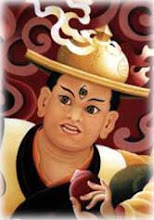
Wednesday, October 1, 2008

Al Jazeera News Video and Article: The Dalai Lama: The devil within


From Al Jazeera People & Power (which claims at least 40 million viewers)

The Dalai Lama has imposed a ban on the worship of a 500-year-old deity called Dorje Shugden

The Dalai Lama has imposed a ban on the worship of a 500-year-old deity called Dorje Shugden.

Across the world 4 million Buddhist Tibetans worship this particular deity. The ban has created tension and dissent amongst the one million Tibetans living in India and in May 400 monks were thrown out of monasteries because of their religious beliefs.

In the Tibetan refugee camps, Shugden worshippers have been turned away from jobs, shops and schools. Posters with the message "no Shugden followers allowed" cover hospital and shop fronts.

The tension has been fueled by the Tibetan exile government who brandish Shugden worshippers as terrorists closely linked to China.

Shugden followers in India have decided to take matters into their own hands, taking the Dalai Lama to court for religious discrimination.