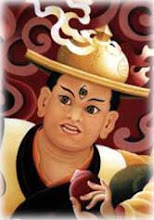
Showing posts with label Kyabje Trijang Rinpoche. Show all posts

Friday, February 11, 2011

The Dalai Lama's sectarian "non-sectarian" approach

The Dalai Lama makes a great deal of being non-sectarian and claims that those who practise Dorje Shugden are sectarian.  He quotes such 'sectarianism' as one of his main reasons for banning the practice of Shugden:

2. Obstacles to the emergence of genuine non-sectarianism: His Holiness has often stated that one of his most important commitments is the promotion of inter-religious understanding and harmony. As part of this endeavour, His Holiness is committed to encouraging non-sectarianism in all schools of Tibetan Buddhism. In this His Holiness is following the example set by his predecessors, especially the Fifth Dalai Lama and the Thirteenth Dalai Lama. Not only is a non-sectarian approach mutually enriching for all Tibetan Buddhist schools, but it is also the best safeguard against a rise of sectarianism that could have damaging consequences for the Tibetan tradition as a whole. Given the acknowledged link between Dolgyal* worship and sectarianism, this particular practice remains a fundamental obstacle to fostering a genuine non-sectarian spirit within the Tibetan Buddhist tradition.

(*Dolgyal is a derogatory term for Dorje Shugden)


Bigotry, discrimination, hatred

So how non-sectarian is the Dalai Lama?  This is the definition of sectarianism from Wikipedia:

Sectarianism, according to one definition, is bigotry, discrimination or hatred arising from attaching importance to perceived differences between subdivisions within a group, such as between different denominations of a religion or factions of a political movement.

Identity Card
Trijang Rinpoche
This definition contains many powerful words such as 'bigotry, discrimination and hatred', all of which apply to the Dalai Lama's public pronouncements about the practice of Dorje Shugden.  An enforced signature campaign to stop the practice has led to Tibetans practising bigotry and hatred towards those who disagree with the Dalai Lama's political ban of the practice. Discrimination is exactly what Shugden practitioners are experiencing in Tibetan communities throughout the world (shockingly, even in democratic Western countries such as the USA, France and Switzerland) as they are branded as spirit worshippers by the Dalai Lama.  Paradoxically, this makes the Dalai Lama's own Guru Trijang Rinpoche a spirit worshipper and invalidates the whole Gelugpa lineage; but this unwanted consequence doesn't seem to have dawned on the Dalai Lama.

Considering the evidence of ostracism and discrimination, and the Dalai Lama bringing the subject of Shugden up at every public meeting of Tibetans in an attempt to completely stamp out the practice, how can the Dalai Lama be said to be non-sectarian?

Rime

Another red herring is the Dalai Lama talking about 'Rime' or 'Rigme' (pronounced Reemay).  Here is an example from a talk he gave on 14th January 2011 as reported by Voice of Tibet radio:

Since I, as an ordinary body of Amdo, got the name of fourteen Dalai Lama, I ought to follow the steps of my predecessors.  It is my responsibility to serve the Rigme teachings of Tibet.

Rime is a non-sectarian movement that began in Tibet, prompted by the political infighting between the different traditions of Tibetan Buddhism.  The Dalai Lama is claiming the Rime is non-sectarian and should be followed whereas the practice of Dorje Shugden is sectarian.  By making such false claims, and encouraging discrimination against a religious tradition that was promoted by his own Teacher, the Dalai Lama shows himself to be sectarian.  The approach of Rime is quite different to that of the Dalai Lama.  Ringu Tulku says:

Ris or Phyog-ris in Tibetan means "one-sided", "partisan" or "sectarian". Med means "No". Ris-med (Wylie), or Rimé, therefore means "no sides", "non-partisan" or "non-sectarian". It does not mean "non-conformist" or "non-committal"; nor does it mean forming a new School or system that is different from the existing ones. A person who believes the Rimé way almost certainly follows one lineage as his or her main practice. He or she would not dissociate from the School in which he or she was raised.

Rime therefore doesn't mean practising all traditions.  It also doesn't mean blurring the lines between traditions, as the Dalai Lama is wont to do:

Rimé is not a way of uniting different Schools and lineages by emphasising their similarities. It is basically an appreciation of their differences and an acknowledgement of the importance of having this variety for the benefit of practitioners with different needs. Therefore the Rimé teachers always take great care that the teachings and practices of the different Schools and lineages and their unique styles do not become confused with one another. To retain the original style and methods of each teaching lineage preserves the power of that lineage experience. Kongtrul and Khentse made great efforts to retain the original flavour of each teaching, while making them available to many.

Fourteenth Dalai Lama
This shows that the Dalai Lama is using Rime for his own political purposes of uniting all the schools of Tibetan Buddhism (and even the non-Buddhist Bon school) under his control.  He has distorted the meaning of the teaching.  This is clear from a talk he gave to a Russian audience on 27 November 2010 in response to a question about receiving empowerments from different traditions:

There is no problem. No differences are there at all. You should receive Gelug empowerment; you should receive Nyingma empowerment; you should receive Sakya empowerment; and you should receive Kagyu empowerment. As for me, I receive all of them. Well, all Nyingma, Sakya, Kagyu and Geden are students of seventeen Mahasiddas and scholars. Shugden worshippers are saying that if a Gelugpa worship Shugden, it is incorrect to keep a text of Nyingma. That is wrong. In twenty century, because of Shugden, sectarian is developing in Tibet. This is wrong.

Notice that the Dalai Lama uses this occasion to unfairly brand Shugden practitioners as sectarian. He also uses wrong logic to justify eclecticism: 'Nyingma, Sakya, Kagyu and Geden are students of the seventeen Mahasiddhas and scholars'. While this is undoubtedly true, there are important differences in their presentation of Buddha's teachings which are appreciated by those who follow Rime but not by the Dalai Lama.  We can therefore see that true Rime celebrates diversity, whereas the Dalai Lama's idea of Rime is to amalgamate the schools by claiming there is no difference and everyone should practice all schools, expressly against the Rime edict that one should follow one lineage as one's main practice and no dissociate from that school.  The Dalai Lama has dissociated himself from the Gelugpa school and from his root Guru through his criticism of Dorje Shugden practice and practitioners.  His actions are therefore sectarian and non-Rime, even though he claims to have banned the practice because he's non-sectarian!

Ask yourself this question:  How is someone non-sectarian by banning a religious practice and outlawing it?  This is clearly contradictory.  It's against the Rime teachings that the Dalai Lama claims to support.
Je Gendundrub, First Dalai Lama
There are further contradictions in the Dalai Lama's position. In his speech of 14th January, the Dalai Lama says he must follow his predecessors by protecting the Rime school, but the First Dalai Lama, Je Gendundrub wrote a beautiful praise to Je Tsongkhapa called Song of the Eastern Snow Mountain in which he says:

From now until enlightenment
I shall seek no refuge other than you.
O Venerable Father and Sons (Je Tsongkhapa and his two spiritual sons, Khedrubje and Gyaltsabje)
Please care for me with your compassion.

The Rime system didn't exist until the nineteenth century, five hundred years after the First Dalai Lama  proclaimed his sole refuge to be Je Tsongkhapa.  Rime is therefore a relatively recent development. The present Dalai Lama seems to have forsaken Je Tsongkhapa's tradition for the sake of following no tradition (he's not following Rime, as clearly explained) and he has also forsaken the kindness of his Gurus by having them branded as spirit worshippers.

Finally then:  why doesn't the present Dalai Lama show the example of his ultimate predecessor, the First Dalai Lama and remain within the Gelugpa school of Buddhism while respecting all others, appreciating and celebrating their differences as a true Rime practitioner would?  Instead, he has chosen the path of sectarian intolerance by banning one of the main practices of Je Tsongkhapa's tradition, which he seems intent on destroying, and merging all schools of Buddhism into one by claiming they are all the same. The only explanation can be that Je Gendundrub was a pure spiritual practitioner whereas the present Dalai Lama is, first and foremost, a politician with worldly concerns who is twisting the meaning of non-sectarian and Rime for his political ends: power and influence.

Thursday, September 2, 2010

The Dalai Lama's ban on Dorje Shugden continues to cause suffering and disharmony

Because there is no recent Western media coverage, the Dalai Lama continues to disparage Dorje Shugden practitioners with no fear of being exposed; and there is ample evidence that he is still working to destroy this Buddhist practice in both the East and the West.

On 1st September he gave a talk at Sera Mey monastery in southern India that was broadcast on Voice of Tibet Radio, a mouthpiece of the Tibetan government in exile:

Reporter: The Dalai Lama said that it was more harmful than beneficial if anyone who worshipped Dholgyal (Shugden) came to receive his initiation. He also made a statement with respect to Shugden.

The Dalai Lama: As for Kyabje Pabongkha, he is really like the real Heruka. He is the lord of Chakarasambhara’s father and mother; he is lord of Lamrim and Mind Training. That is really amazing. It is wrong that some criticize him. The previous Dalai Lama imposed a strict ban on Shugden. When the predecessor passed away, he has made great efforts with respect to Shugden. That is wrong. Therefore, knowing all things, I imposed a ban on [Shugden]. It is wrong that some says this is order of the Dalai Lama. I am aware of the significance and reasons, as well as what the previous lamas have done. Then I imposed a ban [on Shugden].

These days, they are being supported by Communist China. Shugden devotees in Tibet are given special help. They encourage people to worship Shugden. Some monasteries are asked to worship [Shugden]. These are the reasons. Most of you already know. Today once again… over there they are making loud noises (laughs). They are debating. The debating is good. When they are making noise, it is not right if I say nothing (laughs). Sera-May monastery faced serious difficulties. Basically it is Pomra Khamtsen. Shugden devotees, being headstrong, …to beat and to kill.

…became real Chinese spirit. Therefore [they] do not know. I have nothing to say if they voluntarily and knowingly [worship Shugden]. It is religious freedom. It is up to you whatever deity you want to worship. But I should explain its source and background. This is my responsibility.

His speech is full of contradictions:

If Je Pabongkhapa is “real Heruka”, a fully enlightened being, how could he be wrong about Dorje Shugden practice?

The Dalai Lama says that he imposed a ban on the practice, which is true; but then says that people have religious freedom to choose whatever Deity they want to worship!

He also claims that Shugden practitioners are receiving support from Communist China, a statement that has no basis in fact. This is a calculated political statement, a lie, guaranteed to turn Tibetans against Shugden practitioners. The Dalai Lama knows this, yet he shamelessly creates religious disharmony for his own purposes.

Despite his use of the words, 'religious freedom', there is no freedom because of the Dalai Lama's religious dictatorship; there are many unpleasant consequences for those who refuse to give up the practice. Here are some recent examples provided by the Dorje Shugden Society:

• May 2010: Chushi Gangdurk Organisation, New York USA (which is a political association) met with the Dalai Lama and informed him that they had removed the members who believed in Dorje Shugden and vowed to disassociate and remove any Shugden believers in the future for His Holiness' happiness.

• 26th Feburary 2010: Central Chushi Gangdurk Organisation's headquarters in New Delhi gave a letter to Dalai Lama which stated that they hadn’t associated with the Shugden believers since 1996 and vowed to continue disassociating from the Shugden people in the future too.

• February 20, 2010: 68 of the 100 invited guests and performers left a wedding party in New York City because a few Dorje Shugden devotees were invited. Those who left apologized and explained that they did not want to break the oath that they had taken to segregate the followers of Dorje Shugden.

• July 29 2009: The Tibetan section of Radio Free Asia, with the intention to turn the general Tibetan people against the Shugden devotees, demonized the Shugden devotees for abducting Tenzing Thakpa (Woeser Rinpoche's father) and a 13-year-old boy, along with few goats and sheep in Markham, Tibet. In reality, Woeser Rinpoche's father and the boy were victims of a flood and Tenzing Thakpa was seen alive and well, traveling in Lhasa and India.

• 2008: The oath and signature campaign of breaking off religious and material relationship with Shugden devotees was introduced in the monasteries and Tibetan settlements

• October 2008: The Tibetan Association of Western Massachusetts, USA, was shut down because it had some Shugden believers as its members.

• July 2008: Wanted posters of several monks involved in the Western Shugden Society protests appeared in Queens, New York. Al Jazeera reported about the wanted posters saying, "No Shugden worshipper has ever been charged or investigated for terrorism and yet the monks that continue to worship Shugden remain victims of name and shame."

Due to the Dalai Lama's words and actions remaining unchallenged, acts of discrimination and ostracism are being perpetrated even in the USA, let alone in undemocratic Tibetan society. From this we can see that the Dalai Lama has caused a deep, worldwide schism in the Buddhist community that is affecting Buddhists everywhere. This poisonous disharmony is completely contrary to Buddha's teachings on love and compassion.

Finally, another recent case of blatant discrimination in a Western country is to be found at Kalachakra Kalapa Centre in Austria. As the course publicity prominently states:

“Please note: Shugden practitioners or practitioners following Geshe Kelsang Gyatso cannot participate in this event.”

Practitioners of other religions are not excluded, only Buddhist followers of Je Pabongkhapa and Trijang Rinpoche, who were the lineage holders of Kalachakra and other transmissions in the Gelugpa tradition.

With no apparent sense of irony, the publicity finishes with: “May all beings be happy”!

From this we can see that it is still the Dalai Lama's aim to remove Dorje Shugden practitioners, both Eastern and Western, from Buddhist society and he is working very hard for this aim. He is abusing his position and authority, encouraging others to engage in actions of ostracism that are damaging the international Buddhist community.

Wednesday, July 28, 2010

Frequently Asked Questions about Dorje Shugden

We are currently preparing a section of Frequently Asked Questions on the subject of Dorje Shugden for our website, and here is a preview.

(If you have any questions you'd like us to answer on our upcoming FAQ, please include them in the comments section.)


Q: What exactly is the Dorje Shugden practice and what does it involve?
A. Dorje Shugden is an emanation of the wisdom of all Buddhas appearing as a Dharma Protector to protect and increase the Dharma realizations within our minds.

The practice of relying on Dharma Protectors was taught by Buddha Shakyamuni and practised by Indian and Tibetan Buddhists. There are many Dharma protectors such as Mahakala, Kalarupa, Palden Lhamo and Dorje Shugden. In order to protect the Dharma realizations in one's mind, Dharma Protectors must necessarily be emanations of Buddhas and Bodhisattvas and are therefore part of the Three Jewels of Buddhist refuge, specifically the Sangha Jewel.

Although Dorje Shugden helps everyone because he is a Buddha, his main job is to protect the Gelug tradition of Je Tsongkhapa (1357-1419), and especially the Ganden oral lineage instructions. The practice of Dorje Shugden involves making offerings and requests with faith to Dorje Shugden -- who is seen as one with Je Tsongkhapa and the Wisdom Buddha Manjushri -- to protect the teachings of Je Tsongkhapa's tradition, to pacify all obstacles to its growth throughout the world and to bestow favorable conditions for the Buddhadharma to flourish both in our minds and in the world in general.

You can read more about this subject here. If you would like to see the prayers to Dorje Shugden that are recited every day by faithful practitioners, you can do so here.

Q: What benefits do people derive from doing the practice of Dorje Shugden?
A: In the introduction to the practice of relying upon the Dharma Protector in the Heart Jewel sadhana published by Tharpa Publications it says:

“This sadhana includes two practices revealed by the Wisdom Buddha Manjushri. The first is a special Guru yoga in which we visualize our Spiritual Guide as Je Tsongkhapa, who himself is a manifestation of Manjushri. By relying upon this practice, we can purify negativity, accumulate merit, and receive blessings. In this way, we will naturally accomplish all the realizations of the stages of the path of Sutra and Tantra, and in particular we will attain a very special Dharma wisdom.

The second practice is a method for relying upon the Dharma Protector Dorje Shugden. Through this, we can overcome obstacles to our practice and create favourable conditions so that we can nurture and increase our Dharma realizations. If we rely upon the Dharma Protector Dorje Shugden sincerely, our faith in Je Tsongkhapa will naturally increase and we will easily gain experience of the pure Buddhadharma transmitted directly to Je Tsongkhapa by the Wisdom Buddha Manjushri.

If we practise these regularly and sincerely, we will reap a rich harvest of pure Dharma realizations, and eventually come to experience the supreme joy of full enlightenment.”

You can read more about the benefits of relying upon Dorje Shugden here. Here are a couple of extracts:

"Dorje Shugden always helps, guides, and protects pure and faithful practitioners by granting blessings, increasing their wisdom, fulfilling their wishes, and bestowing success on all their virtuous activities."

"If we rely sincerely upon Dorje Shugden, he will arrange the conditions that are most conducive for our Dharma practice but these will not necessarily be the ones that we ourself would have chosen! Dorje Shugden will bless our minds to help us transform difficult situations into the spiritual path, and he will open the wisdom eyes of his faithful followers, enabling them always to make the right decisions."

Q: Where did the practice of Dorje Shugden originate, and what is its significance today for practitioners?
Dorje Shugden is an emanation of the Wisdom Buddha Manjushri who arose as a Dharma Protector to fulfil a promise he had made in a previous life when as Duldzin Dragpa Gyaltsän, one of the principal disciples of Je Tsongkhapa, he promised to become a protector of Je Tsongkhapa's tradition. This is explained by the Dalai Lama's teacher and Gelugpa lineage holder, Kyabje Trijang Rinpoche, in his text called “Music Delighting the Ocean of Protectors” which can be downloaded here.

Ngatrul Dragpa Gyaltsen (1619-54), a revered teacher who lived at the same time as the fifth Dalai Lama, predicted that he would arise as Dorje Shugden. He was the last incarnation in a long line of enlightened Indian and Tibetan Buddhist Masters which includes Manjushri, Mahasiddha Biwawa, Sakya Pandita, Butön Rinchen Drub, Duldzin Dragpa Gyaltsän, Panchen Sönam Dragpa, and many others. See biographies of these previous incarnations of Dorje Shugden.

For its significance for today's practitioners, see the answer to the next question.

Q. How does the practice of Dorje Shugden fit in with Buddhist teachings and practices and help practitioners implement those into daily life?
A: The practice of Dorje Shugden supports and enhances our practice of Sutra and Tantra in daily life. By making requests to Dorje Shugden and relying upon him sincerely -- just as the great enlightened Masters of the Gelugpa tradition have done for centuries -- we will be cared for so that we can accomplish our final goal of full enlightenment as swiftly as possible.

Buddhas can and will appear as anything that will benefit living beings, including as Spiritual Guides and in a protecting aspect as a Dharma Protector. In this spiritually degenerate time it is very difficult for spiritual practitioners to make progress on the paths to liberation and enlightenment on their own; there are many obstacles and we have little merit or good karma. We need help to remove obstacles and to manifest good conditions for our practice and this is the unique function of a Dharma Protector. The Dharma Protector is seen as an aspect of our Spiritual Guide to help us to accomplish pacifying, increasing, controlling and wrathful actions that are necessary for making spiritual progress.

There are many different Dharma Protectors that we can rely upon, but it is said that at this time Dorje Shugden is the protector who is most able to help us. We have a special karmic connection with this Deity, which means that we can receive swift and powerful help by relying upon him as opposed to other protectors. Check here for more information about Dorje Shugden.

We will just like to give some relevant quotes to help at this point:

"There is no difference in the compassion, wisdom, or power of the various Dharma Protectors, but because of the karma of sentient beings, one particular Dharma Protector will have a greater opportunity to help Dharma practitioners at any one particular time.

Among all the Dharma Protectors, four-faced Mahakala, Kalarupa, and Dorje Shugden in particular have the same nature because they are all emanations of Manjushri.
However, the beings of this present time have a stronger karmic link with Dorje Shugden than with the other Dharma Protectors. It was for this reason that Morchen Dorjechang Kunga Lhundrup, a very highly realized Master of the Sakya tradition, told his disciples, 'Now is the time to rely upon Dorje Shugden.' He said this on many occasions to encourage his disciples to develop faith in the practice of Dorje Shugden."

Wednesday, September 16, 2009

The Tide has Turned - Gelugpa Tradition Revival in the East and the West

Homage to Guru Protector Dorje Shugden!

Since the Western Shugden Society demonstrated against the Dalai Lama's ban on the practice of Wisdom Buddha Dorje Shugden last year, much has happened that is a cause for rejoicing. These demonstrations came about because the Tibetan government were organizing the expulsion of Dorje Shugden practitioners from Tibetan society with those practitioners having no recourse and no free speech, and although the WSS made many requests to the Dalai Lama requesting him to stop, he never replied. The peaceful protests arose out of compassion, not out of anger. Now the problems they were addressing have stopped, at least temporarily. Moreover, developments on various fronts also show how necessary and effective this expression of free speech in Western society was in terms of showing support and thereby increasing the confidence of sincere practitioners in India and elsewhere. They have heralded a revival of Dorje Shugden practice throughout the world.

Persecution stops, WSS stops

As the world media spotlight is never far away, the Dalai Lama and his followers are forced to be more cautious, and as a result we are hearing less about the persecution of Dorje Shugden practitioners in the Tibetan exile community in India. Recent information indicates that the Tibetan government have stopped the persecution because the Dalai Lama's reputation is decreasing in the world due to this mistake. If the Dalai Lama continues to speak out and act to destroy the practice of Dorje Shugden and the beloved Gelugupa tradition transmitted by the lineage holders Je Phabongkhapa and Trijang Rinpoche, as well as many other great Gelugpa Lamas and their disciples, he now knows that WSS demonstrators will continue to protest to bring this hypocrisy and injustice to the world's attention. The WSS wants peace. If the Dalai Lama and his government stop, the demonstrations stop. If they do not stop, the WSS does not stop.

Politicians backtrack

The Dalai Lama's student and Tibetan prime minister, the monk Samdhong Rinpoche, has even been embarrassed into publicly criticizing the Abbots for the forced signature campaign. This is ironic, as he was of course an instigator of this campaign, but it is a clear indication that the exile government knows now that they cannot get away with this disastrous policy, and feel the political need to distance themselves from it by scapegoating the Abbots.

Court case

The court case against the Dalai Lama and Samdhong Rinpoche wends its way through the Delhi High Court, to be heard in September. Whatever the outcome, it is at least being taken seriously as there are pages upon pages of documented evidence of the ban and its repercussions -- persecution, violence, segregation, etc.

High Gelugpa Lamas speak up

Recently the Ganden Tripa, the Ganden Throne Holder and head of the Gelugpa school, spoke out publicly in support of Trijang Choktrul. The Dalai Lama has never been the head of the Gelugpa school (nor any of the other Tibetan Buddhist schools); it is the Ganden Tripa who has traditionally been responsible for what happens within the Tibetan Gelugpa tradition, and this support for a famous Tibetan Dorje Shugden practitioner indicates the Ganden Tripa's lack of support for the Dalai Lama's interference in this tradition. It indicates that more and more Gelugpa Lamas who have continued their practice of Dorje Shugden in secret now have the confidence to come out of the closet and defy the Dalai Lama and his government in exile.

Dorje Shugden practitioners now have their own qualified temples and monasteries, free from political interference

Many Lamas, monks and other practitioners now have the confidence to join forces in practicing this tradition openly.

Perhaps the most compelling sign that the tide is turning is the growth of the monasteries Serpom Norling and Shar Gaden. Very fortunately, 500 monks from Ganden and 400 monks from Sera received their own land and are making new monasteries and temples where they can continue to practice the Gelugpa tradition purely without political disturbance. They are receiving financial support from individuals in the West, other Tibetan Lamas, and the WSS. As you can see from the pictures, they are working extremely hard and effectively, just as Dorje Shugden practitioners once upon a time worked hard to build the Tibetan community in exile after 1959.

These extraordinary qualified monasteries have arisen just ten minutes away from Sera and Ganden monasteries, the homes the monks were forced to leave for refusing to sign their names to say they would not support Dorje Shugden practitioners either materially or spiritually. These impressive buildings and the daily religious activities of the monks are a potent witness to the Dalai Lama's failure to use his power and reputation to stamp out a pure religious tradition. The lineage Gurus have been restored to their rightful places on the thrones and the walls of the new temples. These new developments also show clearly how religion and politics do not mix. It seems as though the pure Gelugpas have broken away forever from Tibetan politics, both in the West and in the East. Despite some run ins with Dalai Lama supporters, and attempts by the Tibetan Government in Exile to stir up animosity towards Dorje Shugden practitioners, the ranks of the monks are growing all the time.


The annual Medicine Buddha Festival will held in Serpom Monastery on Sept 29, 2009, when hundreds of monks will perform pujas three times a day for a week 'for the well-being and prosperity of all living beings, and particularly of devotees and well-wishers of the Peace Deity Dorje Shugden'.

Other monasteries throughout the world

There seems to be a revival of Dorje Shugden practice throughout the East, with temples and monasteries growing up or continuing to flourish in Tibet, in Chatreng, Chamdo and Kham, as well as in Mongolia, Nepal, and Taiwan.

In the West, the New Kadampa Tradition also flourishes, with over 1100 Centers and branches.

Dorje Shugden's practice is growing like his statues

There are also Dorje Shugden statues being built both in the East and the West. People from all around the world are ordering more and more Dorje Shugden statues to be intalled in their respective centres and temples. This summer will see the unveiling of a beautiful new set of Dorje Shugden five lineages in the Kadampa Temple in England.

Dorje Shugden empowerment to thousands of Westerners

Last but not least, next week in England between 4000 and 5000 Western Buddhists, more than ever before, will receive a Dorje Shugden empowerment and Lamrim teachings from Venerable Geshe Kelsang Gyatso at the UK Kadampa Meditation Centre. For his entire life, Geshe Kelsang has fearlessly practiced, preserved, and promoted the pure Gelugpa tradition of Je Tsongkhapa as passed to him by Trijang Rinpoche.

All in all, it is proving impossible to stamp out this great tradition. Dorje Shugden's time has come! May all living beings be happy and experience religious freedom.

So that the tradition of Je Tsongkhapa,
The King of the Dharma, may flourish,
May all obstacles be pacified
And may all favorable conditions abound.

If you know of other hopeful developments, please let us know in the comments section.

Sunday, July 12, 2009

Ganden Tripa Authorizes Dorje Shugden Practitioner to Represent the Gelugpa Tradition

April 23, 2009

I, the undersigned, Lungri Namgyel, the official head of the Gelug order of Tibetan Buddhism (Ganden Tripa) and successor to the said order’s founder, Je Tsongkhapa (1357-1419), whose headquarters are Ganden Monastery in Karnataka state, south India, hereby confirm that:

• His Eminence Trijang Chocktrul Rinpoche, having been educated in the teachings of the Gelug order of Tibetan Buddhism, and officially recognized by His Holiness the 14th Dalai Lama as being the incarnation of the late Trijang Dorje Chang, Tutor to the 14th Dalai Lama and one of the greatest twentieth-century Buddhist masters of this order, is fully qualified to act in the capacity of director of Trijang Buddhist Institute in the state of Vermont, United States of America, where he is currently residing at 210 Morning Star Lane, Northfield, Vermont 05663 USA.

• I confer upon Trijang Buddhist Institute the authority to represent and transmit the teachings of the Gelug order of Tibetan Buddhism in the United States.

• Thus authorized, Trijang Buddhist Institute is dedicated to preserving, representing, and transmitting the Buddhist teachings of the Gelug tradition.

Signed,

Ganden Tripa Lungri Namgyel

For more information, click here.

Friday, April 17, 2009

The History of Dorje Shugden

In the commentary Heart Jewel, Geshe Kelsang explains the spiritual history of the Dharma Protector Dorje Shugden -- a short account that is deeply inspiring to practitioners and that evokes great faith. It is enough history for many who have faith in their spiritual teachers, lineage and Protector.

Now a new website has been completed, which gives more detail and historical context through which everyone, even the most skeptical, can hopefully start to see that Dorje Shugden has always been relied upon as a Buddha.

This website uncovers the texts, rituals, historical works and art dedicated to the practice of the Wisdom Buddha Dorje Shugden. As the author, Trinley Kalsang, explains:

"Although there are many texts that reveal the gradual development of the system of ritual for this deity, much of this has not been brought out in the open for examination."

Much of this material in fact has been deliberately suppressed because it proves that Dorje Shugden has been considered an enlightened being and the Protector of the Gelug lineage for several hundred years, since he first arose in this form; and this quite obviously undermines the 14th Dalai Lama's pronouncements of Dorje Shugden being a spirit of the dark forces, a Chinese demon, and so on.

Trinley Kalsang, a scholar of Tibetan, focuses on works from the time period before the 20th century. He leaves aside the works of Pabongkha Rinpoche and Trijang Rinpoche with the exception of various references to how these have drawn upon these earlier works. In particular, it can now be seen how the basic components of the practice were originally developed within the Sakya tradition and then incorporated into the Gelug tradition.

In particular, these translations and essays naturally disprove many of the fallacious ideas written in The Shuk-den Affair by Georges Dreyfus, who put the onus of the development and spread of Dorje Shugden on the individual figure of Pabongkha Rinpoche in the 20th century. He was not the first to do so, but he lent the Dalai Lama's claim Western academic credibility and enabled copy cat commentators, altogether doing a great deal of damage to the reputation of Dorje Shugden and his followers.

As Trinley Kalsang explains, the presentation of The Shuk-den Affair follows the same approach as that found in polemical Tibetan works, including the Brief History of Opposition to Shugden by the Tibetan Government in Exile's “Dolgyal Research Committee", the main thrust of which is to discredit the Dorje Shugden practice by discrediting Pabongkha Rinpoche. With this approach, the existing practice is presented as a whimsical device of one person rather than as a true spiritual practice with precedence. With The Shuk-den Affair, Dreyfus took this same pre-existing presentation and wrapped it in a seemingly scholarly package.

Dreyfus therefore got behind the Dalai Lama and his Government in Exile in discrediting the practice of Dorje Shugden and falsely accusing the highly revered Gelugpa Lama Je Phabongkhapa of possessing a sectarian agenda. Regrettably, some later Western commentators such as David Kay relied upon Dreyfus's work as the basis for their own inaccurate and defamatory accounts of the Wisdom Buddha without doing the original research that would have shown them that Dreyfus's work was full of problems and political bias to begin with. Consciously or not, these commentators' omission in doing decent research, relying so heavily on accounts by the Dalai Lama, TGIE and Dreyfus, seems to have arisen from trying to stay on the right side of the Tibetan power structure. It appears that they took as their starting point the assumption that the Dalai Lama must be right and skewed the history to fit with this. Had they found these collected works, and used them, they might have been able to tell a more accurate story.

The main sources for this website were originally collected by the Mongolian scholar and master Lobsang Tamdin (1867-1937), who gathered a number of earlier texts written by Mongolian and Tibetan masters. Regardless of where individuals stand on whether or not people should be allowed to continue their practice of Dorje Shugden, the translations on this website prove that Pabongkha Rinpoche did not invent any aspect of this practice, but merely absorbed and propagated it.The translations speak for themselves -- not a lot of added interpretation or polemics are required to challenge the views of the Dalai Lama, the TGIE, Dreyfus, and other detractors.

As the author says:

"In short, it has been revealed from historical sources that Dorje Shugden is the Three Bodhisattvas: Avalokiteshvara, Vajrapani and Manjushri. He is the sole protector ever to bear the title Protector of the Conqueror Manjunatha, having the responsibility to protect and promote the doctrine of the Second Buddha Jamgon Lama Tsongkhapa. "

Monday, March 23, 2009

Helmut Gassner on the Dalai Lama and Dorje Shugden

If you have not yet had the chance to read Helmut Gassner's speech at the Friedrich-Naumann-Foundation Hamburg, on March 26th 1999, it is well worth doing so.

Helmut Gassner is a long-term Western Buddhist monk, scholars and practitioner, and he was the interpreter (and chauffeur) for the Dalai Lama for 17 years. He has a unique inside understanding of the Dalai Lama's motives and so on, and personally knew all the original players in this drama.

According to a contemporary:

"Of those of us who had gathered around and subsequently left Geshé Rabten, the outstanding exception was Helmut Gassner. He stood loyally by Geshé and retains his robes to this day. He spends his time between the center in Switzerland and Trijang Labrang in Feldkirch, Austria. Helmut is notable for wading into the shocking Dorje Shugden scandal with his courageous speech to the Friedrich-Naumann Foundation in 1999."

Saturday, March 7, 2009

Pabongka Rinpoche and the Gelugpa Tradition

Pabongka Rinpoche (1878-1941AD) was one of the greatest Gelugpa Lamas of the past century. He possessed many spiritual realizations and was highly revered. He was the root Guru of both the 14th Dalai Lama's own principal teachers, Trijang Rinpoche and Ling Rinpoche; therefore, almost all the Dalai Lama's Dharma knowledge comes from Pabongka Rinpoche.

Je Pabongka
His reputation is currently being besmirched by some detractors of Dorje Shugden, but there is an increasing amount of information about him becoming available on the Internet to show that this criticism is unfounded. This includes the new blog called "Scholars and Yogis Please Check!", which has recently run a series of articles on Pabongka Rinpoche.

As the translator of his famous text Liberation in the Palm of Your Hand explains, Je Phabongkhapa had a profound and far-reaching influence on the Gelug tradition:

Pabongka Rinpoche was probably the most influential Gelug Lama of this century, holding all the important lineages of Sutra and Tantra, and passing them on to most of the important Gelug Lamas of the next two generations; the list of his oral discourses is vast in depth and breadth. He was also the root guru of the Kyabje Ling Rinpoche (1903-83AD), Senior Tutor of the Dalai Lama, Trijang Rinpoche, and many other highly respected teachers. His collected works occupy fifteen large volumes and over every aspect of Buddhism. If you have ever received a teaching from a Gelug Lama, you have been influenced by Pabongka Rinpoche.

Zong Rinpoche, also a highly regarded Gelug Lama, says on the blog mentioned above:

Kyabje Trijang Rinpoche and Kyabje Ling Rinpoche were tutors to His Holiness the Dalai Lama. They taught His Holiness everything from basic teachings to advanced levels.

Kyabje Phabongka passed all of his lineages to Kyabje Trijang Dorje Chang. He often said this in discourses. The purpose of this detailed exposition is to affirm the power of the lineage. If we lose faith in the lineage, we are lost.

We should remember the biographies of past and present teachers. We should never develop negative thoughts towards our root and lineage gurus."

Thursday, December 18, 2008

Ten Simple Reasons why Dorje Shugden is a Buddha


1. Dorje Shugden is the last incarnation in a lineage of enlightened Masters


Dorje Shugden arose from an incarnation lineage of enlightened Teachers. As the highly realized Master, Tagpo Kelsang Khedrub Rinpoche, said:

You have manifested in different aspects
As Indian and Tibetan Masters,
Such as Manjushri, Mahasiddha Biwawa, Sakya Pandita,
Buton Rinchen Drub, Duldzin Dragpa Gyaltsen, Panchen Sonam Dragpa, and many others.

Their life stories are explained in the book Heart Jewel. Since his lineage is enlightened, Dorje Shugden is a Buddha too.

2. Dorje Shugden could not be subdued by the 5th Dalai Lama or other Lamas

When Ngatrul Dragpa Gyaltsen, the last human incarnation, manifested as the Dharma Protector Dorje Shugden (as he had predicted he would do), the 5th Dalai Lama initially developed the mistaken idea that he was a spirit and tried to subdue him through performing wrathful fire pujas. Although he and many high Lamas tried to destroy Dorje Shugden, they were not able to because he is a Buddha. This is explained by Tagpo Kelsang Khedrub Rinpoche in his praise of Dorje Shugden, Infinite Aeons:

Then, although four undisputed powerful Tantrikas,
With concentration, began wrathful rituals to strike you down,
Through the power of having completed Guhyasamaja's two stages,
You would not be silenced, and showed signs of heroism; praise to you!

3. Dorje Shugden’s form teaches the paths of Sutra and Tantra

Dorje Shugden's form teaches the complete stages of the path of Sutra and Tantra, and such qualities are not possessed by the forms of worldly beings.

He appears as a fully ordained monk
to show that the practice of pure moral discipline is essential for those who wish to attain enlightenment. In his left hand he holds a heart, which symbolize great compassion and spontaneous great bliss – the essence of all the stages of the vast path of Sutra and Tantra. His round yellow hat represents the view of Nagarjuna, and the wisdom sword in his right hand (like the one held by Manjushri and Je Tsongkhapa) teaches us to sever ignorance, the root of samsara, with the sharp blade of Nagarjuna’s view. This is the essence of all the stages of the profound path of Sutra and Tantra. He rides a snow lion, symbolizing the four fearlessnesses of a Buddha.

Explanation of his remaining features can be found in Heart Jewel, as can the specific
enlightened function of each of the thirty-two Deities of his mandala, which are explained in a prayer written by Sachen Kunlo, one of the great Sakya Lamas.

Only enlightened beings display a meaningful aspect that teaches the entire path to enlightenment. Therefore, Dorje Shugden is a Buddha.

4. Dorje Shugden is the incarnation of the five Buddha families

Dorje Shugden is the incarnation of the five Buddha families and appears in five forms that symbolize the five families. These forms are explained in Heart Jewel and are called 'the five lineages of Dorje Shugden'. The principal Deity, Duldzin Dorje Shugden rides a snow lion. Vairochana Shugden is white and rides an elephant. Ratna Shugden is yellow and rides a palomino horse. Pema Shugden is red and rides a turquoise dragon. Karma Shugden is dark red and rides a wrathful Garuda bird. These forms also symbolize Dorje Shugden's attainment of pacifying, increasing, controlling and wrathful actions and his main form as Duldzin symbolizes the supreme attainment – enlightenment itself.

Since Dorje Shugden is the manifestation of the five Buddha families, there is no doubt that he is the same enlightened nature as Buddha Vajradhara.

5. Dorje Shugden is the same nature as Manjushri, Je Tsongkhapa, Mahakala and Kalarupa

Dorje Shugden is the same nature as Je Tsongkhapa – they are the same person performing different functions. Many Dorje Shugden sadhanas state that Dorje Shugden is the embodiment of the “Guru, Yidam, and Protector”, where “Guru” refers specifically to Lama Tsongkhapa. When we practice the sadhana of Dorje Shugden, we are indirectly practising the Guru yoga of Je Tsongkhapa. Gelugpa practitioners who have a sincere trust in Dorje Shugden will have no difficulty in generating unshakeable faith in Je Tsongkhapa and his teachings.

Both Je Tsongkhapa (‘peaceful Manjushri’) and Dorje Shugden (‘wrathful Manjushri’) are manifestations of the Wisdom Buddha Manjushri, as are the Dharma Protectors four-faced Mahakala and Kalarupa. Therefore, they are all the same enlightened nature.

6. Dorje Shugden’s mandala Deities are the same nature as the body mandala Deities of Lama Losang Tubwang Dorjechang

The Deities of Dorje Shugden’s mandala are the same nature as the Deities of the body mandala of Lama Losang Tubwang Dorjechang, who is in essence Je Tsongkhapa.

Lama Losang Tubwang Dorjechang is the principal object of refuge in the blessed Gelug practice of Offering to the Spiritual Guide (Tib: Lama Chöpa), which comes from Manjushri’s Emanation Scripture. In this practice we visualize within his body the thirty-two Deities of Guhyasamaja. These thirty-two Deities manifest as the thirty-two Deities of Dorje Shugden's mandala, indicating that Dorje Shugden is the same nature as Je Tsongkhapa and Guhyasamaja and thus a fully enlightened being.

Of the Deities of the five lineages of Dorje Shugden explained above, the principal Deity is Duldzin Dorje Shugden, who is the manifestation of the aggregate of consciousness of Lama Losang Tubwang Dorjechang. The remaining four lineages are manifestations of Lama Losang Tubwang Dorjechang’s remaining four aggregates. Je Tsongkhapa himself therefore manifests as an enlightened Protector and retinue to protect his Ganden tradition.

7. The practice of Dorje Shugden was taught by Je Tsongkhapa in Tushita Pure Land

Dorje Shugden arose as the principal Protector of Je Tsongkhapa's doctrine over 300 years ago, at the time of the Fifth Dalai Lama, who composed the first verse of praise to him. However, the current system of empowerment and worship is more recent and comes from a great Lama called Tagpo Kelsang Khedrub Rinpoche. Lama Tagpo went to Tushita Pure Land where he met Je Tsongkhapa and requested a teaching. In response, Je Tsongkhapa lifted up the cloth covering the front of the golden throne on which he was sitting, and the five lineages of Dorje Shugden emerged. Dorje Shugden then transmitted the practice to Lama Tagpo, just as Maitreya had transmitted five major philosophical treatises to Asanga in Tushita Pure Land in earlier times.

Lama Tagpo later transmitted these instructions to Pabongkhapa Dechen Nyingpo, who passed them on to Trijang Dorjechang Losang Yeshe -- spiritual father and son. From Trijang Rinpoche, they passed to our present day Gelugpa Teachers.

8. Dorje Shugden has been relied upon by the highest Lamas, who themselves have been recognized as enlightened

Well-regarded Gelugpa practitioners of Dorje Shugden include the 5th Dalai Lama, Kelsang Thubten Jigme Gyatso 1743-1811 (a tutor to the 9th Dalai Lama), Losang Thubten Wangchuk Jigme Gyatso 1775 – 1813 (head of the Gelugpa in Mongolia), Ngulchu Dharmabadra, the Indian master Shakya Shri Bhadra, the 11th Dalai Lama 1838 - 1856 (who installed Dorje Shugden as the Protector of the Gelugpa tradition), Gyara Tulku Rinpoche, Tomo Geshe Rinpoche (regarded by the 13th Dalai Lama as an emanation of Je Tsongkhapa), Serkong Rinpoche (regarded by the 13th Dalai Lama as Vajradhara),Tagpo Kelsang Khedrub Rinpoche, Pabongkha Rinpoche, Trijang Rinpoche, Ling Rinpoche, Khangsar Rinpoche, Tathag Rinpoche (in charge of the Tibetan Government after the death of the 13th Dalai Lama), Zong Rinpoche, Lobsang Tamdin, Ribur Rinpoche, Khen Rinpoche Losang Tharchin, Lati Rinpoche, Geshe Rabten, Geshe Ngawang Dhargyey, Khensur Rinpoche, Khechog Rinpoche, Dagyab Rinpoche, Gelek Rinpoche, Lama Yeshe, Geshe Kelsang Gyatso, Yongyal Rinpoche, the 14th Dalai Lama (until he was in his forties), Dagom Rinpoche, Gonsar Rinpoche, Gangchen Rinpoche and others.

These Lamas themselves have all been recognized as realized, holy beings, with many thousands of Tantric disciples who revered them as living Buddhas.


The later Lamas were all direct or indirect disciples of the great Pabongkha Rinpoche and Trijang Rinpoche. The 14th Dalai Lama says that Pabongkha Rinpoche and Trijang Rinpoche were “wrong” to worship Dorje Shugden, but they have been recognized as emanations of Heruka and Amitabha respectively, and were the principal upholders of Je Tsongkhapa’s Gelug doctrine in their time; so how can they be wrong?

9. Dorje Shugden performs the twenty-seven deeds of a Buddha

The highly realized Master, Tagpo Kelsang Khedrub Rinpoche, composed a verse of praise:

With deep faith I prostrate to you, Vajradhara Dorje Shugden.
Although you have already attained the Buddha ground
And engage in the twenty-seven deeds of a Buddha,
You appear in various forms to help the Buddhadharma and sentient beings.

These twenty-seven deeds, explained in the Perfection of Wisdom Sutras, range from showing living beings the way to enter the spiritual path to liberation up to guiding them to the final attainment of Buddhahood. Since Dorje Shugden performs all these twenty-seven deeds, it is clear that he is a Buddha.

Some people say that Dorje Shugden has harmed practitioners who have strayed from the Ganden tradition, but there are no examples of this forthcoming, whereas there are many examples of how Dorje Shugden has protected living beings. For example, Dorje Shugden was responsible for the Dalai Lama being able to safely travel from Tibet to India in 1959.

Even today, there are many Buddhist practitioners with their own stories to tell of how they have been protected by this Dharma Protector. Dorje Shugden's name means 'Vajra Possessing Strength', indicating that he has great power and strength to spread Buddhadharma and to help people in these degenerate times.

10. Relying upon Dorje Shugden leads to supramundane results

The difference between a Dharma Protector and a worldly protector is that the former is an enlightened being whereas the latter is not. Worldly protectors have no ability to flourish the Buddhadharma nor to protect Dharma realizations in a practitioner's mind. As a Dharma Protector, Dorje Shugden’s principal function is to protect our Dharma practice, not to help our mundane affairs.

Dorje Shugden always helps, guides, and protects faithful practitioners by granting blessings, increasing their wisdom, fulfilling their virtuous wishes, and bestowing success on all their virtuous activities. Dorje Shugden does not help only Gelugpas; because he is a Buddha, he helps all living beings.

Dorje Shugden has removed obstacles and created the conditions for the extraordinary growth of Je Tsongkhapa's teachings, and most importantly realizations of those teachings, in this current age. Je Tsongkhapa's doctrine is now spreading to countries throughout the world. For example, any spiritual success enjoyed by NKT and FPMT practitioners is due to the blessings of this Buddha. (Lama Yeshe, the founder of the FPMT, relied sincerely on Dorje Shugden throughout his life.)

Those who rely upon Dorje Shugden know that their spiritual realizations come from his blessings. However, as with a relationship with any holy being, this is something that can only be experienced by someone who relies on him with strong faith over a long period of time, steadily building their connection with him.

Gyara Tulku Rinpoche from Drepung Loseling Monastery wrote a prayer of gratitude, whose sentiments are shared by Dorje Shugden practitioners worldwide:

First you gave me a highly qualified Spiritual Guide
Under whom I studied and practised Dharma.
When through following misleading advice I came close to entering wrong paths,
You immediately hooked me back into the correct path.

O Duldzin, King of the Dharma, I thank you for your kindness.
Your body is the synthesis of all Sangha Jewels,
Your speech is the synthesis of all Dharma Jewels,
And your mind is the synthesis of all Buddha Jewels.

Saturday, December 6, 2008

A Critique of 'Why the Dalai Lama Matters' by Robert Thurman, Part 4

Continued from Chapter 2: What has the Dalai Lama Accomplished?

The next section is 'accomplishments and impacts'. Here, Thurman waxes lyrical on the Dalai Lama's achievements in various spheres but, as before, is somewhat prone to exaggeration. For example:


If you understand Buddhism not merely as a world religion, religion as primarily a system of belief and the Dalai Lama as being a great philosopher in the tradition he claims as his own, that of the Seventeen Great Professors (Pandits) of Nalanda University (the great Monastic University of classical India), then he emerges not as a religious preacher but as a world teacher. The Dalai Lama can be classified as someone like Albert Einstein, Arnold Toynbee, Bertrand Russell or Stephen Hawking who advances human knowledge from a philosophical and scientific point of view. If Buddhism is one third ethics, one third psychology and religion as therapy, and one third scientific wisdom, then the Dalai Lama brings new aspects of those three values to the world. (page 39)

These days the Dalai Lama talks about 'the Nalanda Tradition'. He mentioned it again in an
interview in Nottingham in May 2008:

So some people criticize me, I banned that sort of spirit worship; that is not true. I just simply make
clear what is the reality, whether as we are follower of Nalanda tradition, we are not spirit worshipper. So there is a sort of danger, I feel in my eye, the degenerating, the pure Nalanda tradition eventually become like spirit worship. That is not good.

Thurman says that the Dalai Lama claims this tradition as his own. These days, the Dalai Lama
does not talk about the four schools of Tibetan Buddhism so much as the Nalanda tradition. This term is his own invention. The Dalai Lama was not educated in the 'Nalanda tradition' but in the Gelugpa tradition of Tibetan Buddhism, a tradition he seems to have disowned and for which he shows increasing disrespect.

The Dalai Lama's Junior Tutor and Guru is Trijang Rinpoche,
the Spiritual Guide of a whole generation of Gelugpa teachers from the highest Lamas to the most humble novices. The Dalai Lama has ordered Trijang Rinpoche's thrones to be removed from Ganden Lachi and Shartse monasteries. The thrones represent the continuing presence of this great Master, so what is the Dalai Lama saying by ordering their removal? Even though Trijang Rinpoche treated the Dalai Lama as his own son and cared for him in every way, how does the Dalai Lama repay that kindness? By branding him as a 'spirit worshipper', telling everyone he was 'wrong, yes wrong' and having his thrones removed from two monasteries where he was revered.

The Dalai Lama is clearly trying to destroy Trijang Rinpoche's reputation. In Buddhism, respect
for one's own Teacher is vital. It is said to be the root of the path. The Dalai Lama has cut his root. Even so, he continues to travel around the world, giving the teachings from the very lineage he has turned his back on.

Where does the Dalai Lama's knowledge come from? It comes only from Buddha through the
Dalai Lama’s teachers, whom he has thoroughly disrespected by calling them 'spirit worshippers' and enabling the persecution of their followers. The Dalai Lama is not the source of these teachings. Whereas the theory of relativity as formulated by Einstein was a unique achievement that came from his own thought experiments, if the Dalai Lama is teaching Buddhism correctly, he has nothing doctrinally “new” to offer. Buddha's insights were uniquely established two and a half thousand years ago and the content is non-negotiable. Buddha is the true genius and advancer of human knowledge, but he's not given the credit – the Dalai Lama takes the credit in Thurman's mind.

Recently, at an FPMT Center in Deerfield Beach, Florida, they proudly advertized that the
teachings they gave were in the “lineage of the Dalai Lama”. But what is this lineage exactly? Does it begin and end with the Dalai Lama?

Buddhism is so much more than philosophy, science or 'religion as therapy' (a curious choice of
words!). Boiling it down to mundane subjects of study seems to do Buddhism a grave disservice. Maybe it is the academic in him, but Thurman here misses the magic of Buddhism. No amount of philosophy, science or therapy can lead to permanent liberation from suffering and the full enlightenment of Buddhahood.

Later, Thurman gives us some insight as to why he wrote his book:


The main accusation against the Dalai Lama that surfaces from time to time around the world is
that of being ineffective. People have said, “What has the Dalai Lama ever accomplished, for all his running around the world meeting celebrities?” In fact, answering that question is one of the main drives of this book. (page 45)

It is clear what the Dalai Lama has accomplished by doing this – celebrity and power. And
Thurman seems to be justifying this lifestyle (or defending it, not sure which). While it is true that the Dalai Lama has been so far ineffective in his political work for Tibet, no doubt he will also receive more accusations against him in the future as a result of his illegal and unconstitutional actions. It could be argued that the main accusation against the Dalai Lama already is, 'Why is he lying?' or 'Why is he using Buddhism to maintain his own power and position at the cost of harmony in the Buddhist community?' Not surprisingly, Thurman does not address these questions.

He has been working on and gradually introducing a democratic constitution in the exile
community as a way to live in exile and a model of self-rule whenever it is recovered in Tibet. It is a secularist constitution based on the separation of church and state, in which all religions are equal under the law (p 51)

Since 1959 the Dalai Lama has had ample opportunity to introduce a democratic system of
government into the Tibetan community in exile. Why hasn't it happened? Could it be because he wants to continue the union of politics and religion for his own ends?

More and more Tibetans see the faults with this system. For example, in an article called “He Has
Got It Wrong” (on pro-Tibetan Phayul, taken from the Times of India), Eliot Sperling says of the recent meeting (November 2008) about Tibet’s future in Dharamsala:

And while the Dalai Lama has repeatedly stated that the Tibet issue is not about him but about all
Tibetans, the end result of the special meeting bears out China's stance: in spite of his democratic rhetoric, the Dalai Lama has never empowered Tibetans to feel comfortable taking stands at variance with him. Accusations of disloyalty to the Dalai Lama remain a weapon in political and personal feuds in Dharamsala.

In her article commenting on this newspaper opinion piece, a Tibetan woman calling herself Mountain Phoenix says:

So when we look at the outcome of this “special meeting”, there was nothing special about it, let
alone “historic”. The ultimate decision was again not to decide but to leave the decision to the Dalai Lama.

In the article 'Tibetan Religion and Politics', posted on Phayul, Samten G Karmay makes a powerful case for separation of church and state based upon the incompatibility of the role of head of democratic government with being a spiritual master:

In this theocratic system the head of the state was not only the political leader of the people, but
also their spiritual master. In other words, the whole population was subjected and put in the position of spiritual disciple to the master. Within the context of this essentially religious bond no devotee would ever dream of opposing the view of the master, because that would be tantamount to breaking the sacred relationship between the master and the disciple. How does this fit with the discussion of democracy among the Tibetans in exile for whom HH the Dalai Lama is the political leader, but who nonetheless bestows on them the Kalachakra initiation?

This ties in with the Mongoose-Canine letter, in which the writer says:


Moreover, to challenge Lamas you have used religion for your aim. To that purpose you had to develop the Tibetan people’s blind faith. In the end you adopted the same activity that you yourself had pointed out was mistaken in other Lamas. For instance, you started the politics of public Kalachakra initiations. Normally the Kalachakra initiation is not given in public. Then you started to use it continuously in a big way for your politics. The result is that now the Tibetan people have returned to exactly the same muddy and dirty mixing of politics and religion of Lamas which you yourself had so precisely criticised in earlier times.

The implication is that the Dalai Lama has used his position as a Spiritual Leader through
Kalachakra initiations to keep the Tibetan people docile because they would never challenge their Teacher with whom they have 'samaya' (sacred bond) through initiation. Geshe Kelsang Gyatso of the New Kadampa Tradition has been branded 'a samaya breaker' for the very reason that it is claimed that he received this initiation from the Dalai Lama in 1954 and has subsequently spoken out against him (N.B. he never received this initiation).

The point of the Dalai Lama using Kalachakra for political purposes is mentioned again later in
the Mongoose-Canine letter:

Nowadays you have given the Kalachakra initiation so many times you have made the Tibetan
people into donkeys. You can force them to go here and there as you like. In your words you always say that you want to be Gandhi but in your action you are like a religious fundamentalist who uses religious faith for political purposes.

Samten G Karmay's article was well read and received many supporting comments from
Tibetans. Some examples:

religion and politics should be separated in order to have a true democratic system.people will
more freely speak out when its a religious person most people don’t want to speak freely.the present tibetan govt needs to listen to people and stop calling people who give their opinion as chinese spy etc.this is not democracy

**************

As you know, Tibetan government in exile, in realty there is no democracy. It's like still old Tibet
style empire rules, Lama Rules or one of the linage rule. One man leader for ever and at the same time they call it real democracy. In fact no Democracy and it's like banana democracy. Young educated Tibetans have no chances to become a Top leader of Tibet as a 'President".

**************


You are right -- majority Tibetans has no power to tell or comment to the head of the exile.
Because our head leader is Religious one. One of the four linage of mahayana Tibetan Buddhism. If you do so there is Dhamtsik Samaya breaking between a guru and the deciple.

Since the Dalai Lama alone has the power to determine whether democracy is introduced or not,
and there is no democracy, the facts speak for themselves. Thurman should not whitewash this situation by pretending that the Dalai Lama is pro-democracy when his clear lack of action in this area shows that he is not. Either the Dalai Lama is fooling Thurman, or Thurman is fooling us.

Thurman talks about the Dalai Lama's enthusiasm for inter-religious dialogue. Why then doesn't the Dalai Lama want to talk to Dorje Shugden practitioners to resolve the big schism in his own community? Their pleas for understanding are ignored. The Religion section in the recent Memorandum has fine words for the Chinese, but surely the Dalai Lama and his government should get their own house in order first?

Thurman also mentions that the Dalai Lama defends the Muslim religion. In these times, when
Muslims tend to be demonized as terrorists due to the actions of a relative minority of fanatics, this is a laudable thing to do. But surely it would have been worth mentioning here that the Dalai Lama has a natural sympathy with Muslims because he is from a Muslim family and was born in a Muslim village? It is a curious omission.

Thurman talks about 'what we might call the magic of the Dalai Lama's special presence' (page
62). He reports that 'the effect of his presence is galvanizing; people often burst into tears, forget what they were planning to say, commonly change their preconceived ideas completely'. Is it a good idea to mention this? Thurman's intention is probably good, and what he wants to show is how his Guru’s presence has a powerful effect on others’ minds. However, there have been many charismatic leaders throughout history who have had powerful speech and been able to get people to do what they want, and this has not always worked out to their advantage. Does Thurman really want us to think that the Dalai Lama has some power to influence others, and maybe even to be able to control their minds?

It's a curious thing to talk about and, more than
anything else, it indicates a somewhat unexamined faith. Thurman doesn't see how it could be misunderstood, which is a little naïve of him. If people said such fanatical things about Geshe Kelsang, no doubt his critics would jump on the bandwagon with their accusations of 'mind control cult'; so why do no alarm bells sound when people talk so glowingly of the control the Dalai Lama exerts over others?

Thurman talks extensively about Tibetan, Tibetans and the Tibetan cause, which is also the
other main motivation for his writing this book. He's obviously trying to coax Chinese sympathizers to see a different view of the Dalai Lama with one aim in mind – the fulfilment of the Dalai Lama's wishes for autonomy for Tibet within China. This is where the book is quite political and a little obvious in its intentions. Thurman is saying “look, the Dalai Lama is really a very special guy and you can trust him, so give us back Tibet!”

Whilst not wanting to get too political, I have to mention an obvious lie about the Dalai Lama, the
Tibetan resistance, and the CIA because it has implications for Thurman's trustworthiness and honesty. Thurman says:

Tibetan warriors did fight for over a decade as guerrillas (with a low level of support from CIA until
betrayed by Henry Kissinger and President Richard Nixon), against the Dalai Lama's instructions, but admittedly with his admiration for their bravery.

Does Thurman really believe this version of events? There is evidence that the Dalai Lama
himself was on the CIA payroll in the 1960's, to a tune of $186,000 per annum. From the Wikipedia article on the 14th Dalai Lama:

In October 1998, The Dalai Lama's administration acknowledged that it received $1.7 million a year in the 1960s from the U.S. Government through the Central Intelligence Agency (CIA), and also trained a resistance movement in Colorado (USA).

According to a report in a Vancouver newspaper:


Funds to pay this army were funnelled through the Dalai Lama and his organization, which received US$1.7 million a year, later reduced to $1.2 million. (Of this, the Dalai Lama himself was paid $186,000 a year. But no one has ever suggested that he pocketed it. The money was used to operate his exiled government's offices in Geneva and New York.) The last year in which the stipend was paid out was 1974. By then, of course, U.S. policy had changed to one of embracing China, not antagonizing it.

According to Thurman, the guerrillas fought ‘against the Dalai Lama's instructions’; yet the Dalai Lama's administration received the funds to pay for the army from the CIA, with the Dalai Lama himself being paid. No one can claim that the Dalai Lama didn't know what was going on, or that it was against his instructions.

From an interview with the Dalai Lama with the New York Times in 1993:

Q: In Tibet, from the late 1950's until the early 1970's, one of your brothers was involved in leading
a guerrilla movement against the Chinese. In fact, the guerrillas were supported by the C.I.A. How did you feel about that?

A: I'm always against violence. But the Tibetan guerrillas were very dedicated people. They
were willing to sacrifice their own lives for the Tibetan nation. And they found a way to receive help from the C.I.A. Now, the C.I.A.'s motivation for helping was entirely political. They did not help out of genuine sympathy, not out of support for a just cause. That was not very healthy.

The Dalai Lama says “they found a way to receive help from the CIA” as if the Dalai Lama and
the Tibetan Administration knew nothing about it; but they were on the payroll! The Dalai Lama is being disingenuous, as is Thurman in misrepresenting events. The aim is to maintain the Dalai Lama's public image as someone who does not agree with armed struggle, which is obviously wrong.

Things become even more nefarious when the Mongoose Canine letter states:


The problem of your government splitting the Tibetan guerilla fighters in Mustang. In fact, they
were originally organised by your government with the help of the CIA. In 1969, as a consequence of Nixon’s policy with China, you provoked a fight among the Tibetan guerillas over their weapons. This fight finally destroyed them.

What then are we to make of Thurman's statement:


But overall, in spite of massive oppression, Tibetans have maintained the non-violence the Dalai
Lama has asked of them. The greatness of this achievement cannot be overstated (page 74)

Thurman seems attached to Tibet and what it represents in his mind, as he is attached to the
Dalai Lama and what he represents. Such attachment is obviously going to influence his views. Either Thurman is deliberately misrepresenting events, or he is genuinely in the thrall of the Dalai Lama and Tibet and ignoring obvious truths. This is also evident when he says:

Nowadays the world is spinning out of control in a “war on terror” which is endless in principle
because violence simply breeds more counter-violence. Then, to our amazement, we encounter a people who eschew terrorism and violence from the beginning. (page 74)

Michael Parenti is an American political scientist, historian and media critic whose article Friendly
Feudalism: The Tibet Myth explains the excesses of Tibet as a feudal society. The view that Tibet was some kind of Shangri-la filled with happy, non-violent practising Buddhists is a complete myth.

As for 'eschewing violence from the beginning', there was almost a riot in New York in July 2008
when a large group of Tibetans who had just been to a teaching by the Dalai Lama surrounded a much smaller group of Western Shugden Society protestors to spit, jeer and throw things. The protestors had to be evacuated by New York Police for their own safety. There have also been many other instances of violence against Dorje Shugden practitioners, some of which are itemized on the Dorje Shugden Controversy article in Wikipedia.

Again, there are many more points in this chapter that merit comment, but we will finish on something positive -- the Dalai Lama's concluding statement from his Nobel Peace Prize acceptance speech:

I pray for all of us, oppressor and friend, that together we succeed in building a better world
through human understanding and love, and that in doing so we may reduce the pain and suffering of all sentient beings. Thank you. (page 95)

We pray that the Dalai Lama will live by these words and stop all the problems he has created in
the Buddhist community through his divisive actions. Dalai Lama, please give religious freedom to Dorje Shugden practitioners.