Showing posts with label sectarianism. Show all posts

Monday, November 14, 2011

The Dalai Lama: "Shugden practitioners: you're not welcome"

Dalai Lama: "don't come and
receive teaching  from me"
We recently received another sad proclamation from the Dalai Lama, who regularly makes an issue of the practice of Dorje Shugden in his public teachings, and encourages his followers to stop this venerable, traditional Dharma practice.  This time his teaching is from Mongolia.

We're grateful to the Dorje Shugden Society for translating this news item which appeared on Norway Tibet Radio (Voice of Tibet) on 9th November 2011:


Broadcaster: Since the Dalai Lama is giving Avalokiteshvara initiation tomorrow, he has announced that Dholgyal devotees (Shugden) should not attend the initiation. He also said the propitiation of Dholgyal has caused detrimental to the harmony among Buddhists.


Dalai Lama: Today it is like I am giving a lecture. It is not necessary that you listen by recognizing me as Guru. It is alright if you come to listen, saying what Dalai Bashi is  saying. Tomorrow you will take a teaching. I am giving an initiation. I am giving vow. Therefore there will be Guru and disciple relationship. Pure commitment is  necessary. During the course of initiation, the pure commitment is necessary. In time, I worshipped the so-called King Shugden. I didn't know and I make a mistake. Then, having paid attention, it was wrong. Also, during the course of through analysis, king Shugden emerged during the time of the fifth Dalai Lama. If I say about the way the fifth Dalai Lama recognize king Shugden, according to his text, the nature of king Shugden is evil spirit; its cause was the wrong prayer; and its function is to harm Buddhism and living beings. So if you say this is a protector of Buddhism, or a protector of Gelug Tradition, it is disgrace and shame. Je Rinpoche has empowered and entrusted Six hands Mahakala and Dharmaraj. Je Rinpoche has seen capability in them. Simply speaking, he didn't empower them on guesses. (laugh). If you worship king Shugden, you have broken commitment with the fifth Dalai Lama, and so to the thirteen Dalai Lama. If you receive an initiation from me, you will break commitment with me. If there is anyone who worship king Shugden – actually it is your choice whether or not you worship - , please don’t come to receive teaching from me. If you are a monk or a lay, please don’t come tomorrow. If you are deceived by saying that business and luck would flourish, you should stop from now. You don’t need to be afraid at all. In case a case is necessary to be filed, I would file the case. You don’t need to be afraid. It is a freedom if you contempt although you know it is wrong. It doesn’t matter if you walk upside down.
The only detriment to harmony is the Dalai Lama's sectarian and exclusive attitude towards Dorje Shugden practitioners.  He alone is destroying harmony in the international Buddhist community by making an issue where is none.

Friday, February 11, 2011

The Dalai Lama's sectarian "non-sectarian" approach

The Dalai Lama makes a great deal of being non-sectarian and claims that those who practise Dorje Shugden are sectarian.  He quotes such 'sectarianism' as one of his main reasons for banning the practice of Shugden:

2. Obstacles to the emergence of genuine non-sectarianism: His Holiness has often stated that one of his most important commitments is the promotion of inter-religious understanding and harmony. As part of this endeavour, His Holiness is committed to encouraging non-sectarianism in all schools of Tibetan Buddhism. In this His Holiness is following the example set by his predecessors, especially the Fifth Dalai Lama and the Thirteenth Dalai Lama. Not only is a non-sectarian approach mutually enriching for all Tibetan Buddhist schools, but it is also the best safeguard against a rise of sectarianism that could have damaging consequences for the Tibetan tradition as a whole. Given the acknowledged link between Dolgyal* worship and sectarianism, this particular practice remains a fundamental obstacle to fostering a genuine non-sectarian spirit within the Tibetan Buddhist tradition.

(*Dolgyal is a derogatory term for Dorje Shugden)


Bigotry, discrimination, hatred

So how non-sectarian is the Dalai Lama?  This is the definition of sectarianism from Wikipedia:

Sectarianism, according to one definition, is bigotry, discrimination or hatred arising from attaching importance to perceived differences between subdivisions within a group, such as between different denominations of a religion or factions of a political movement.

Identity Card
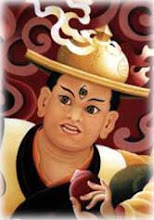
Trijang Rinpoche
This definition contains many powerful words such as 'bigotry, discrimination and hatred', all of which apply to the Dalai Lama's public pronouncements about the practice of Dorje Shugden.  An enforced signature campaign to stop the practice has led to Tibetans practising bigotry and hatred towards those who disagree with the Dalai Lama's political ban of the practice. Discrimination is exactly what Shugden practitioners are experiencing in Tibetan communities throughout the world (shockingly, even in democratic Western countries such as the USA, France and Switzerland) as they are branded as spirit worshippers by the Dalai Lama.  Paradoxically, this makes the Dalai Lama's own Guru Trijang Rinpoche a spirit worshipper and invalidates the whole Gelugpa lineage; but this unwanted consequence doesn't seem to have dawned on the Dalai Lama.

Considering the evidence of ostracism and discrimination, and the Dalai Lama bringing the subject of Shugden up at every public meeting of Tibetans in an attempt to completely stamp out the practice, how can the Dalai Lama be said to be non-sectarian?

Rime

Another red herring is the Dalai Lama talking about 'Rime' or 'Rigme' (pronounced Reemay).  Here is an example from a talk he gave on 14th January 2011 as reported by Voice of Tibet radio:

Since I, as an ordinary body of Amdo, got the name of fourteen Dalai Lama, I ought to follow the steps of my predecessors.  It is my responsibility to serve the Rigme teachings of Tibet.

Rime is a non-sectarian movement that began in Tibet, prompted by the political infighting between the different traditions of Tibetan Buddhism.  The Dalai Lama is claiming the Rime is non-sectarian and should be followed whereas the practice of Dorje Shugden is sectarian.  By making such false claims, and encouraging discrimination against a religious tradition that was promoted by his own Teacher, the Dalai Lama shows himself to be sectarian.  The approach of Rime is quite different to that of the Dalai Lama.  Ringu Tulku says:

Ris or Phyog-ris in Tibetan means "one-sided", "partisan" or "sectarian". Med means "No". Ris-med (Wylie), or Rimé, therefore means "no sides", "non-partisan" or "non-sectarian". It does not mean "non-conformist" or "non-committal"; nor does it mean forming a new School or system that is different from the existing ones. A person who believes the Rimé way almost certainly follows one lineage as his or her main practice. He or she would not dissociate from the School in which he or she was raised.

Rime therefore doesn't mean practising all traditions.  It also doesn't mean blurring the lines between traditions, as the Dalai Lama is wont to do:

Rimé is not a way of uniting different Schools and lineages by emphasising their similarities. It is basically an appreciation of their differences and an acknowledgement of the importance of having this variety for the benefit of practitioners with different needs. Therefore the Rimé teachers always take great care that the teachings and practices of the different Schools and lineages and their unique styles do not become confused with one another. To retain the original style and methods of each teaching lineage preserves the power of that lineage experience. Kongtrul and Khentse made great efforts to retain the original flavour of each teaching, while making them available to many.

Fourteenth Dalai Lama
This shows that the Dalai Lama is using Rime for his own political purposes of uniting all the schools of Tibetan Buddhism (and even the non-Buddhist Bon school) under his control.  He has distorted the meaning of the teaching.  This is clear from a talk he gave to a Russian audience on 27 November 2010 in response to a question about receiving empowerments from different traditions:

There is no problem. No differences are there at all. You should receive Gelug empowerment; you should receive Nyingma empowerment; you should receive Sakya empowerment; and you should receive Kagyu empowerment. As for me, I receive all of them. Well, all Nyingma, Sakya, Kagyu and Geden are students of seventeen Mahasiddas and scholars. Shugden worshippers are saying that if a Gelugpa worship Shugden, it is incorrect to keep a text of Nyingma. That is wrong. In twenty century, because of Shugden, sectarian is developing in Tibet. This is wrong.

Notice that the Dalai Lama uses this occasion to unfairly brand Shugden practitioners as sectarian. He also uses wrong logic to justify eclecticism: 'Nyingma, Sakya, Kagyu and Geden are students of the seventeen Mahasiddhas and scholars'. While this is undoubtedly true, there are important differences in their presentation of Buddha's teachings which are appreciated by those who follow Rime but not by the Dalai Lama.  We can therefore see that true Rime celebrates diversity, whereas the Dalai Lama's idea of Rime is to amalgamate the schools by claiming there is no difference and everyone should practice all schools, expressly against the Rime edict that one should follow one lineage as one's main practice and no dissociate from that school.  The Dalai Lama has dissociated himself from the Gelugpa school and from his root Guru through his criticism of Dorje Shugden practice and practitioners.  His actions are therefore sectarian and non-Rime, even though he claims to have banned the practice because he's non-sectarian!

Ask yourself this question:  How is someone non-sectarian by banning a religious practice and outlawing it?  This is clearly contradictory.  It's against the Rime teachings that the Dalai Lama claims to support.
Je Gendundrub, First Dalai Lama
There are further contradictions in the Dalai Lama's position. In his speech of 14th January, the Dalai Lama says he must follow his predecessors by protecting the Rime school, but the First Dalai Lama, Je Gendundrub wrote a beautiful praise to Je Tsongkhapa called Song of the Eastern Snow Mountain in which he says:

From now until enlightenment
I shall seek no refuge other than you.
O Venerable Father and Sons (Je Tsongkhapa and his two spiritual sons, Khedrubje and Gyaltsabje)
Please care for me with your compassion.

The Rime system didn't exist until the nineteenth century, five hundred years after the First Dalai Lama  proclaimed his sole refuge to be Je Tsongkhapa.  Rime is therefore a relatively recent development. The present Dalai Lama seems to have forsaken Je Tsongkhapa's tradition for the sake of following no tradition (he's not following Rime, as clearly explained) and he has also forsaken the kindness of his Gurus by having them branded as spirit worshippers.

Finally then:  why doesn't the present Dalai Lama show the example of his ultimate predecessor, the First Dalai Lama and remain within the Gelugpa school of Buddhism while respecting all others, appreciating and celebrating their differences as a true Rime practitioner would?  Instead, he has chosen the path of sectarian intolerance by banning one of the main practices of Je Tsongkhapa's tradition, which he seems intent on destroying, and merging all schools of Buddhism into one by claiming they are all the same. The only explanation can be that Je Gendundrub was a pure spiritual practitioner whereas the present Dalai Lama is, first and foremost, a politician with worldly concerns who is twisting the meaning of non-sectarian and Rime for his political ends: power and influence.
Saturday, January 16, 2010

Sectarianism in Bodh Gaya


The Dalai Lama recently gave teachings in Bodh Gaya, the place of Buddha Shakyamuni's enlightenment. As reported by Tibetan Sun, the only people who were not welcome were Shugden practitioners. It's very sad that at the place where Lord Buddha demonstrated the attainment of enlightenment for the happiness of all living beings, the Dalai Lama should instead demonstrate his attainment of sectarian bias and choose to deny the Dharma to the students of his Root Guru Trijang Rinpoche.

During the teachings, the Dalai Lama took the opportunity, as he often does these days, to justify his ban of Dorje Shugden practice. The report in the Tibet Post erroneously refers to him as 'the head of the Gelugpa sect' which he is not. This position is held by the Ganden Tripa (Ganden Throneholder).

The Dalai Lama is reported as saying:

"actually it [Dolgyal worship] is unrelated to religion, because in the Buddha's commentaries and teachings, except for the worship of Dharma protectors like Mahakala, the worship of deities is not mentioned. It is wrong to venerate house and mountain deities more than Buddha."
Dorje Shugden practitioners venerate him as a Buddha (which he is, being an emanation of Manjushri Je Tsongkhapa) but they do not venerate him more than Buddha Shakyamuni. This is an attempt by the Dalai Lama to claim that Shugden practitioners are not Buddhist. In this way, by spreading untruths and distortions, he hopes to remove Shugden practitioners from the Buddhist community.


Another report from the Voice of Tibet website said (translated from Tibetan by the Dorje Shugden Society):

Broadcaster: During his teaching in Bodh Gaya, His Holiness the Dalai Lama, the jewel of all, said to have received permission and support from his two tutors to give up his worship of Dholgyal (Dorje Shugden). In this regard, our reporter Pasang Dhonden explains:

Pasang: Before His Holiness the Dalai Lama, the supreme leader of Tibetan politics and religion, granted ordination of Bikshus and empowerment of Avalokiteshvara in the morning to devotees from twenty thousand to thirty thousand, he gave instruction and introduction on Dorje Shugden. At that time he explained clearly on the distorted information among the public:

Dalai Lama: Some are saying that the Dalai Lama has changed his mind after the demise of his two tutors. When they were alive, I explained everything to them about my investigating and renouncing the worship of Dholgyal. They agreed. Ling Rinpoche said it was very good and had been very clean. Ling had no connection at all. Kyabje Trijang Rinpoche said that there was no mistake in my way of investigating, and that it must have a purpose and reason. When I renounced the worship comfortably, I informed my two tutors. They agreed and I was granted permission and support. [there is a report] that I have changed my mind after the two tutors passed away. The reality is what I have just said.

When people in Tibet are aware of my ban on worshipping Dholgyal, some are saying that that this is not the intention of the Dalai Lama; the Dalai Lama imposed a ban in order to appease Nyingma and that this is politics. It is not true. My intention is pure. Therefore, I have to explain that the decision I took with pure intention is being distorted.

Be it in China or in Taiwan. Similarly in China, a section of Dholgyal followers are seem to be adopting many methods and efforts these days. In particular, Chinese government found the ban imposed by the Dalai Lama as necessity, and she provides an especial support to Dholgyal followers. Monasteries in Tibet which gave up the worship meanwhile are encouraged not to give it up, but to worship. It is little bit conflicting. It became a political issue. Therefore I thought to explain clearly to you, Chinese Dharma friends here.

Whether it be in it in India, or in Tibet, majority, however, believes my explanation through exhaustive investigation. The public’s stand is wonderful. Thank you! As for the monks of [Gelukpa] monastic establishment, you are very good. It is different matter for few; they remain mischievous. It is different matter. Majority found reason in my statement, and listened and appreciated it. Thank you!

Whether you worship a deity, a demon, or an evil spirit, or whatever you worship, it is in your hand. It is freedom. Nothing is there. However, if you worship without knowing the matter, I have a responsibility to tell you that this is the matter. Therefore I am telling you. It is up to you to think whether you want to listen or not, after I said. I have known many things. It is my mistake if I don’t tell you what I knew. If you don’t listen after I said, it is your loss.

Why does the Dalai Lama feel the need to keep justifying his sectarian position unless he doesn't feel confident that everyone has heard and accepted the message? In essence, Bodh Gaya has been a non-sectarian place for all Buddhists, but the Dalai Lama is playing politics and is taking advantage of this to give very emotional driven, divisive speeches to further the separation of Dorje Shugden followers.

Bodh Gaya's religious sites are in the care of the Mahabodhi Society of India. If you object to the Dalai Lama's sectarian speech and would like to make your disagreement known to the Society, they can be contacted at the following addresses:

Monday, September 8, 2008

Part Five: Disputing Pico Iyer's version of events regarding the Dalai Lama and Dorje Shugden

Fifth and final part of setting the record straight on Pico Iyer's book, Open Road, The Global Journey of the Fourteenth Dalai Lama.

On the false view of non-sectarianism

p 121

In effect, he seemed to be bringing out into the world two sometimes unrelated treasures, each of them explosive, one was Tibet and it’s particular culture, often hard to translate into other tongues, and the other was his brand of Buddhism. To mass general audiences, he always stressed “on crazy wisdom,” as you could call it, because philosophy seemed a way to cut through all the divisions to some universal human core. (“Sectarianism is poison,” he writes in an unusual violent statement in his second autobiography.) When he spoke of Nalanda Buddhism, “in honor of ancient Buddhism University in India from which his tradition’s great philosophers had emerged, he was essentially suggesting that reason and universality could offer places where Gelug practitioner and Kagyu, eastern Tibetan and central, American and Chinese could come together.

“His brand of Buddhism” is a very interesting phrase because that's what it is. What the Dalai Lama is promoting is his very own version of Buddhism, a sort of amalgamation of the traditional Tibetan Buddhist schools of Nyingma, Kagyu, Sakya and Gelugpa. He has referred to it a couple of times now, most recently in Nottingham in May 2008.

What is 'Nalanda Buddhism'? In this context, it is quite simply the Dalai Lama's break with tradition. He advertises it as tradition by using the name of a famous monastic university in India and quoting the names of great Masters such as Nagarjuna, but the truth is that the Dalai Lama is now his own tradition. He wasn't the Head of any school of Tibetan Buddhism so he created his own tradition. He calls it 'rigme' or “non-denominational”. It seems that to arrive at this tradition you pick which bits of Tibetan Buddhism you like (principally Dzogchen teachings) and graft on a bit of philosophy. You also throw out any unique quality of each existing Tibetan Buddhist tradition (such as the traditionally chosen Karmapa or the Buddhist Deity Dorje Shugden), and that is when the problems start.

Divide and rule is the method of this tradition, producing a non-denominational mish-mash of the Dalai Lama's making, masquerading as mainstream Buddhism through the power of his celebrity.

The Dalai Lama has a very strange idea of non-sectarianism. He says “sectarianism is poison” but his idea of sectarianism is practising one spiritual tradition purely. Therefore, to be non-sectarian, one has to receive teachings from all Buddhist schools and practise each one. In an interview in Nottingham in May 2008 he said:

“My approach is promotion of non-sectarian. I myself receive teaching from all different Tibetan Buddhist sect”

If each tradition of Tibetan Buddhism has a complete path to enlightenment, why do we need to receive teachings from all of them? Surely it is fine to practise one while maintaining respect and good relationships with the others? This is true non-sectarianism.

What the Dalai Lama calls non-sectarianism is mixing traditions. What the Dalai Lama calls the “Nalanda Tradition” is his attempt to merge all the schools of Tibetan Buddhism together under his leadership. Therefore, for “Nalanda Tradition” read “tradition of Buddhism created by the Dalai Lama by merging the present traditions of Tibetan Buddhism under a false premise of non-sectarianism that allows the Dalai Lama to do as he pleases.”

Pico Iyer says:

....he was essentially suggesting that reason and universality could offer places where Gelug practitioner and Kagyu, eastern Tibetan and central, American and Chinese could come together.

No, he was essentially suggesting that there could be a tradition of Buddhism that the Dalai Lama has created and is the supreme leader of, and that encompasses all Buddhists. This is what the Dalai Lama has worked for: supreme religious and political power. He's a politician in the robes of a monk, causing confusion by that very dichotomy; posing as a religious authority when he is not the head of any school of Buddhism, speaking words like 'religious freedom' and 'harmony' while he destroys both.

For Buddhist practitioners to come together is very simple. We don’t all need just one tradition of Buddhism that everyone can subscribe to – we simply need to be left alone with the religious freedom to practise our individual traditions as our Gurus have taught us, while respecting without discrimination the differences and uniqueness of the different sects of Buddhism.

We also need a certain Dalai Lama to stop sowing words of disharmony in the Buddhist community and creating schisms where they ought not to be.

Click here for Part One, Part Two, Part Three and Part Four.

Posted courtesy of Lineage Holder.