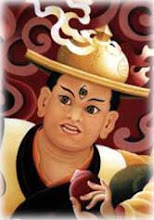
Taken from a major Swiss publication Die Weltwoche, with extracts translated from the German. The whole article can be found here:
Die Weltwoche
Die Legenden des Dalai Lama
04.03.2009
The Legends of the Dalai Lama
March 10 this year will see the 50th anniversary of the uprising of the Tibetan people against China. In the West, the spiritual leader, the Dalai Lama, is worshipped like a pop star. Strange. The normally romanticized theocracy was a corrupt feudal system that enslaved its subjects.
By David Signer
Recently, in the context of his most recent trip to Europe, the Dalai Lama could receive the German Media Award in Baden-Baden, which has previously been granted to celebrities such as Nelson Mandela, Bill Clinton or Bono. On March 10 fifty years ago, the Tibetans rose up against the Chinese hegemony. And it is seventy years since a little farmer's boy became 'His Holiness'.
In winter 1937/38 [the common story of recognition follows].
Everybody loves the now 73-year-old Dalai Lama, and in particular have done so since 1998 when Martin Scorsese brought his autobiography called 'Kundun' into our cinemas. From Richard Gere through to Brad Pitt, from Patti Smith through to Peter Maffay, from Dolly Buster to Robbie Williams: everyone worships the non-stop world jet-setting spiritual leader of the Tibetans. When the Dalai Lama came to Switzerland three years ago, during his eight day visit 30,000 people went onto a pilgrimage to the Zurich stadium to see him. And as is clear with the idolization of the Dalai Lama, whom even people who are not normally fond of personality cults, call 'His Holiness', the same is true for Tibet. There is a common agreement that, before the Chinese marched in, this mountainous region was a paradise of meditating monks and happy farmers living in the midst of splendid mountain scenery -- and that it would be again if it were not for the evil occupiers.
The reality is that until fifty years ago Tibet was a clerical-feudal tyranny. The truth is that a lot of the widespread common knowledge about the country is just wishful thinking. There are also dark sides to the biography of the Dalai Lama, and a lot of obscure stuff is mixed in with the esoteric Lamaism Schwärmerei (excessive sentimentality). However, since there is only little journalism on site, it is not easy to find the truth within the jungle of exile Tibetan and Chinese propaganda.
[Now follows some historical background and how the Dalai Lama, once recognized, lived until his escape.]
In the Dalai Lama's autobiography, however, it sounds like paradise when he mentally travels back to the Tibet of his youth: "No one needs to make too much of an effort in order to earn his living. Existence happens on its own and everything works wonderfully." Accordingly, during his reign, he did not make any effort to reform the country, apart from stopping the legal heritage of tax debts. The fact that political decisions are based upon oracles and astrology is no problem for him, who normally pretends to be democratic and progressive. Even though in his 'five point peace plan' he demands 'respect for the democratic freedoms of the Tibetan people', he himself has not tried until today, not even within the exile communities, to be democratically legitimized. Self-evidently he pretends to be the wholistic leader of the Tibetans, even though, strictly speaking, he is not even the spiritual representative of the whole of Tibet. He is merely the head of the Gelugpa order, the so called Yellow Hats, whose claim for leadership he has been trying to pursue for decades. These contradictions are also true for his ecological engagement. On the one hand, he demands to transform Tibet into a kind of natural reserve park and uses every opportunity to demand more ecological thinking in accordance with Mother Nature. On the other hand, from the first days of his exile onwards, at his seat in Dharamsala, the litter keeps being piled up simply on a large waste dump.
[Some stuff on the 1950’s in Tibet.]
While the Dalai Lama and his entourage went into exile to Dharamsala in India, the Cultural Revolution raged in Tibet. Between 1966 and 1976, thousands of monasteries and cultural monuments were destroyed. Switzerland was the first European country which, in 1961, accepted Tibetan refugees and offered them accommodation and work in Rikon. In 1967, the monastic Tibet Institute was opened. The information from the Dalai Lama and Tibet supporters is often not credible with regards to the Chinese occupancy. Very often it is not mentioned that in the meantime approximately half of the monasteries have been restored and are running again. Also, since the mid-nineties, you can no longer claim that there is a ban on the monastic system. If the Dalai Lama is asked about these things he replies that the monasteries have only been rebuilt for the sake of tourists; thus the Chinese are said to have no interest in maintaining the traditional culture but to re-install it as exotic backdrop and in this way it is being doomed even more. One limitation however has been enforced, undoubtedly against the will of the Dalai Lama: no more children can enter the monasteries. Also in his autobiography, 'His Holiness' claims that, due to resettlement programmes, the Chinese proportion of the population overrides the Tibetans. According to the disputed census in 2000, the proportion of Chinese people within the Tibetan Autonomous Region is 6.1%, with the highest proportion, 17%, being in Lhasa. Again and again the claim has been spread that 1.2 million Tibetans had become victims of Chinese terror, in other words a full fifth of the population. Official statements from Dharamsala even sometimes say that all of these have been Tibetan prisoners who were victims of torture or executions, and very often Chinese concentration camps are mentioned. Without doubt, China is far away from regular constitutional affairs; however the charge of systematic, lethal torture of thousands -- as indicated by the term 'concentration camp' -- is hardly plausible.
Esoteric argy bargy
Towards the end of the 1980s there were again riots in Tibet, and in December 1989 the Dalai Lama received the Nobel Peace Price. About one year before that he became friends with the Japanese Shoko Asahara, who ran a 'spiritual community' with several thousand followers near Tokyo. According to the researches of the publisher Colin Goldner, Ashara visited with the Dalai Lama several times in 1988. This community with their 'appreciated aims and activities' (said the Dalai Lama) was 'Aum', one of the most dangerous and totalitarian cults ever, which performed the Tokyo subway poison attacks in March 1995. The Japanese authorities had been patient with the megalomaniac Guru, despite all warnings, possibly due to the protecting hands of the Dalai Lama. When the Centres after the Sarin attack were finally searched, there were deposits of chemical and other weapons which could have killed millions of people at once. The Dalai Lama however could not even find one single word of regret. Even as late as Summer 1995, when at the Peace University in Berlin, he stated that he would recognize Asahara as a 'friend, even though not necessarily an unmistaken one'.
Also the so-called 'Shugden affair' gives rise to doubts about the much-praised wisdom of the Dalai Lama. In Summer 1996, upon the advice of his state oracle, he banned the worship of the protector Deity Dorje Shugden for his people. A number of abbots and monks protested against this ban. They accused the Dalai Lama of violating religious freedom, who reacted to this insubordination by systematic searches of houses and monasteries in the exile community. Shugden statues were destroyed and renitent monks bashed and beaten. Supporter committees even claimed that the Shugden movement was hand in glove with China.
[Mentions the triple murder. More information about that can be found here: Defamatory accusations of murder repeated over and over again for ten years]
Monks armed with iron bars
Generally, the riots before the Olympic Games were presented by the Western media in a way that they fitted into the image of 'peace-loving Tibetans'’ -- either any violence was supposedly coming from the side of the Chinese, or, if not, claims were made to the effect that Tibetan protesters had only acted in self-defence. Footage documentation and reports from eye-witnesses however give evidence of how monks armed with iron bars and bats went marauding through the historic quarter of town. Buses and cars were pushed over and set on fire, and Chinese shops and houses were pillaged. Molotov cocktails were even thrown into kindergartens, schools and hospitals. The Dalai Lama later claimed that the monks had been Chinese soldiers in disguise. This is because, by definition, Tibetans are non-violent. Around the world, demonstrations of solidarity took place.
[The rest is about the Dalai Lama’s right-wing tendencies and the stories about the liaisons between Tibetans and the Nazis and how the Tibetan regent wrote a letter to 'King Hitler'. The final paragraph is on the question why it is that the Dalai Lama is so popular in the West in spite of all the facts mentioned; and the main conclusion is that it is because Westerners are so naive.]
Saturday, March 7, 2009
The Legends of the Dalai Lama -- Die Weltwoche Article
Monday, October 20, 2008
Who really is the Dalai Lama?
Sur les traces du Dalaï Lama
Un reportage de Gilles Jacquier, Patrick Desmulie et Franck Nosal
Translation of part of the documentary on the Dalai Lama shown on France 2, one of the most popular documentary TV channels in France. This was watched by 4.000.000 to 5.000.000 people on Thursday October 9, 2008.
C’est l’apôtre de la non-violence, le pape du bouddhisme. Prix Nobel de la Paix, il est connu dans le monde entier ; mais qui est vraiment le Dalaï Lama?
Dalai Lama: C'est vrai, je suis toujours au pouvoir, mais cela est lié a la situation particulière au Tibet. Je mene un combat national, ca ce n'est pas de la politique ordinaire.
Dalai Lama: That's true, I am still the head of state, but it is because of the special situation of Tibet. I'm leading a national fight; this is not ordinary politics.
S'il y avait un débat démocratique entre 2 partis démocratiques comme chez vous, alors le dalaï-lama et les moines devraient quitter le pouvoir.
If there was a democratic debate between two democratic parties as you have in your country, then the Dalai Lama and the monks should give up their power.
Reporter:
Le dalai-lama serait donc chef de gvt malgré lui, investi d'une mission divine : sauver le Tibet. Mais fait-il l'hunanimité parmi les siens et d'autre voie peuvent elles se faire entendre ?
Reporter:
Thus, the Dalai Lama would be the head of government despite himself, entrusted with a divine mission: Save Tibet. But do all his people agree with him, and can other views be heard?
C'est en enquetant dans les monasteres que je vais le savoir.
Dans le sud de l'inde, je retrouve des moines dissidents. Eux ont choisi un autre chemin.
It is by investigating the monasteries that I'll come to know the answer.
In Southern India, I meet some dissident monks. They have chosen another way.
Lobsang Yeshe et Namgyal sont les anciens garde du corps du dalaï-lama. Il y a 50 ans, ils sauvaient la vie du chef tibétain fuyant les Chinois. Mais aujourd'hui, ils se sentent trahis.
Lobsang Yeshe and Namgyal were previously the Dalai Lama's bodyguards. 50 years ago, they saved the life of the head of Tibet, running away from the Chinese. But today, they feel betrayed.
Lobsang Yeshe: Le Dalai Lama, je ne veux plus en entendre parler. Ce n'est plus le bouddha de la compassion. C'est un traitre. Le dalaï-lama a commis le crime le plus grave. Il a divisé tous les Tibétains. Il s'oppose à notre divinité, Dordjé Shougdèn. Il nous interdit de la vénérer. A cause de lui, j'ai fait une crise cardiaque. Aujourd'hui, je suis un homme brisé.
Lobsang Yeshe: The Dalai Lama, I don't want to hear about him any more. He is no longer the Buddha of Compassion. He is a traitor. The Dalai Lama has commited the gravest crime. He has divided all the Tibetans. He is against our deity, Dorje Shugden. He has forbidden us from venerating him. Because of him, I had a heart attack. Today, I am a broken man.
Reporter:
Le dalaï-lama, Ocean de Sagesse, a offensé ses vieux compagnons. Et même, en janvier 2008, il va perdre un peu de son sang froid. Devant des milliers de fidèles, il tient des propos d'une rare violence contre des adeptes de cette divinité mystérieuse: Dordjé Shougdèn.
Reporter:
The Dalai Lama, Ocean of Wisdom, has offended his old friends. Furthermore, in January 2008, he will lose a bit of his composure. In front of thousands of supporters, he speaks with an exceptional violence against the followers of this mysterious deity: Dorje Shugden.
Dalai Lama: A cause de cette déité, certains sont devenus violents, c'est intolérable. Je ne veux plus de désordre dans les monastères. Et à ceux qui ne sont pas content, dites leur que le Dalaï Lama approuve les expulsions ordonnés par les abbés dans les temples.
Dalai Lama: Because of this deity, some have became violent, it’s intolerable. I don't want any more disorder in the monasteries. And to those who are not happy, tell them that the Dalai Lama approves of the expulsions prescribed by the abbots in the temples.
Reporter:
Pour la première fois, je découvre un visage autoritaire, lui le sage Tibétain appelle à l'exlusion de fidèle. Pourquoi et qui est cette divinité ? Pour le comprendre je vais rencontrer les adeptes de Dordjé Shougdèn. Ces moines sont pour le dalai-lama de dangereux extrémistes.
Reporter:
For the first time, I discover an authoritarian face – himself the wise Tibetan is calling for the exclusion of the faithful. Why, and who is this deity? To understand this, I am going to meet Dorje Shugden followers. These monks are for the Dalai Lama dangerous extremists.
Moine : Allez-y, c'est par la.
Monk: Go ahead, this way.
Reporter:
Dissimulé au fond de cette salle de prière, je découvre enfin la divinité Dordjé Shougdèn. Elle tient dans sa main droite un couteau, et dans l'autre un coeur humain. Pour ses partisans, Shougdèn apporte la protection, mais pour le dalaï-lama, cette divinité encourage la violence, c'est elle qui divise le Tibet.
Reporter:
Hidden at the back of this prayer hall, I finally discover the deity Dorje Shugden. He is holding a knife in his right hand and a human heart in the other. For his followers, Shugden brings protection, but for the Dalai Lama this deity encourages violence, and is the one who is dividing Tibet.
Moine : Cette déité n'a jamais divisé les Tibétains. C'est faux. C'est le dalaï-lama qui nous a divisé, en nous interdisant de vénérer Shougdèn. Avant, tout se passait bien. La communauté vivait en paix.
Monk: This deity has never divided Tibetans. This is untrue. It is the Dalai Lama who has divided us, by banning Shugden practice. Before, everything was going well. The community was living in peace.
Reporter:
Aujourd'hui les adeptes de Shougdèn sont expulsés de leur monastère, et leur photo placardé dans les rues. Une chasse au sorcière a commencé dans le sud de l'inde, et sur cette affaire, le dalaï-lama a une réponse de spécialiste de la logique.
Reporter:
Today, Shugden followers are expelled from their monasteries, and their photos are posted in the streets. A witch hunt has started in Southern India, and on this matter, the Dalai Lama has the answer of a specialist in logic.
Dalai Lama : Je vous assure, je n'ai jamais donné d'ordre pour écarter les adeptes de Shougdèn. Rien n'est venu d'en haut. Ce sont les abbés qui décident de ces expulsions.
Dalai Lama: I guarantee you, I have never given the order to get rid of Shugden followers. Nothing came from above. It is the Abbots themselves who decide these expulsions.
Reporter:
En fait, le dalaï-lama soupçonnerait ces moines d'etre manipulé par la chine, et ces opposants d'un genre nouveau, je vais même en retrouver en France.
Reporter:
In fact, the Dalai Lama would suspect these monks of being manipulated by China ; and I will even find some of these new types of opponents in France.
Manif: Dalai Lama, Menteur!
Demo: Dalai Lama, liar!
Reporter:
Une démonstration de force sur la plage de la Baulle. Ces bouddhistes européens paradent avec un slogan choc, quitte à déplaire.
Reporter:
A strong demonstration on the beach of La Baule. These European buddhists parade with an impactful slogan, even if unpleasant.
Homme sur le trottoir : Vous etes récuperer par les Chinois !
Man on the sidewalk: You are being used by the Chinese !
Reporter :
Tous ces bouddhistes manifestent pour défendre leurs freres tibétains, adeptes de la divinité Shougdèn. Anabelle vient de Marseille. Cette opposante pointe du doigt les contradictions du dalaï-lama.
Reporter:
All these Buddhists are demonstrating to help their Tibetan brothers, followers of the deity Shugden. Anabelle comes from Marseille. This opponent is pointing the finger at the Dalai Lama's contradictions.
Anabelle: Il y a une escroquerie de la part du dalai-lama à porter les deux robes : et le politique et le moine. Le dalaï-lama est un homme politique, et c'est a dire qu'il a des interets politiques. Et il faudrait qu'on s'en rende compte parce que on dirait qu'on voudrait se voiler la face en Occident parce qu'on veut coute que coute voir apparaître sur l'estrade politique un homme immaculé.
Anabelle: It is fradulent on the Dalai Lama’s part to wear the two robes -- that of the politician and the monk. The Dalai Lama is a politician, and that means he has political interests. We need to realize this because in the West we don’t want to see the truth -- we want by any means to see a stainless man on the political stage.
Reporter:
Principale critique de ces dissidents européens : l'intolérance religieuse du dalaï-lama.
Reporter:
The principal criticism from these European dissidents: the Dalai Lama's religious intolerance.
Saturday, August 23, 2008
Demonstrations against the Dalai Lama in Nantes, France
Partying for Freedom in Nantes : A first hand account of three days of demonstrations against the Dalai Lama's ban of Dorje Shugden
I've just got back from a tiring but incredibly rewarding three days in Nantes. We were demonstrating outside the Zenith Metropole concert hall where the Dalai Lama was giving talks. I heard that they only allow two demonstrations per year at this venue, so we were fortunate.
The demonstrations began on the morning of the first day with a march at La Baulle, a local beach resort. 400 demonstrators took part and we were cheered and clapped by many locals and holiday makers who had taken advantage of a French national holiday to have a long weekend. We marched and chanted along the beachfront for an hour before boarding our coaches and heading off to the main demonstration site.
The weather was bright and sunny to match the mood of the 700 demonstrators, who were from Mexico, Spain, Germany, Italy, Switzerland, India, France, Holland, Ireland, UK and the USA. I'm constantly inspired by the dedication and determination shown by WSS demonstrators who travel long distances because they care so much about the future of Je Tsongkhapa's tradition and are totally determined to stop the Dalai Lama from destroying it.
We were delighted to be joined by a group of Tibetan Shugden practitioners, including Geshes and monks who had been expelled from their monasteries when Dorje Shugden practice was first banned in 1996. Along with many placards, the Tibetan flag flew over our enclosure once again.
Over the course of the three days, many brochures were given out and the situation explained to an often incredulous public. They had come to see an iconic man of peace, but when some heard they were actually attending the talks of a hypocritical and divisive religious dictator, they left.
The demonstrations get better and better and we are able to chant for longer. On the first day, cries of 'Dalai-Lama, menteur!' (Dalai Lama, liar!) and 'Dalai-Lama donne la liberté religieuse' (Dalai Lama, give religious freedom) were accompanied by the sound of clapping and water bottles being bashed together as impromptu percussion instruments that gave a light and joyful air to the proceedings – surely no one would think that we were angry as we all looked to be having such a good time? It was one big rave for religious freedom!
On the second day, drums and bongos appeared, giving a definite Latin feel to our chanted requests. Many demonstrators were dancing to the infectious rhythms and looked a lot happier than anyone who was attending the Dalai Lama's teachings ;-) Our chants went on for well over an hour at a time and at no time did anyone look tired or bored as we were jointly energised by our dedication to our cause and the party atmosphere that crackled through the crowd like high voltage electricity.
Unfortunately we didn't get close to the Dalai Lama as we had in Oxford, but each day as he arrived and departed from the venue he was greeted with 700 people simultaneously bellowing 'menteur!....manteur!', rolling like thunder across the arena.
However, on the final departure on Day Three, circumstances led to a golden opportunity. Access to the venue was obtained by crossing a footbridge over a main road, and each day the Gendarmes would close it off prior to the DL's departure, not allowing anyone to cross it, presumably to prevent someone from dropping something onto his car as it sped underneath. On that final day, many Shugden supporters arrived back late from the cafe on the other side of the road and were prevented from crossing the bridge. They lined the road on one side and the rest of us lined the road on the other. When the DL left, instead of driving him away from us as they had the day before, his motorcade came straight between the two lines of Shugdenites! He was greeted with exuberant roars of 'menteur!' - from both sides of the road this time! He can have been in no doubt after his three days in front of an adoring French public what we, who know of his dishonesty, thought of him.
Well done everyone; see you in Basel!
Posted courtesy of Lineage Holder.
Wednesday, August 20, 2008
Are Dorje Shugden practitioners supported by the Chinese?
Now I understand that there is a belief that because the Dalai Lama has banned the religious practice of Dorje Shugden, Shugden practitioners must be in league with China, a country with which the Dalai Lama has political problems.
I would like to add that other than this illogical reasoning, there is not one shred of evidence connecting Shugden Buddhists with the Chinese. But while there is no link between Shugden Buddhists and the Chinese, there is, on the other hand, direct evidence pointing to the ban. Watch some of the Dalai Lama's speeches here:
So if the Shugden practitioners are not supported by the Chinese, how do Western Shugden Society supporters get to the demonstrations to protest against the Dalai Lama? How can we afford it??? What would we do without the Chinese financing us??!!?? These naive claims make me chuckle.
Do you want to know the truth? Most Shugden practitioners have JOBS! Most of us have cars. And most of us can drive. Shugden practitioners are lots of people: doctors, lawyers, teachers, accountants, software engineers etc -- not exactly people who need to take a loan from the Chinese to support a trip across the border to an American demonstration. I have got to tell you, it ain't that expensive to demonstrate! The fact that the Dalai Lama teaches mostly on weekends has also been very helpful.
As any spiritual person knows, it is worth booking off holidays from work to defend their right to pray.
I can tell you that Canadians of many different backgrounds have given money to support these demonstrations. A Canadian friend said to me. "Of course I want to help financially. Dorje Shugden is in my heart too".
I think it is strange that "Buddhists" want to take away a prayer from other Buddhists. Why do they tell me that I cannot make these prayers of love and compassion? Why? And why do they tell me that I am being sectarian because I am continuing to say this prayer and not following their command to stop? Who is being sectarian here?
This foolishness comes about because people wish to believe that the following misconceptions are true:
1) the Dalai Lama is the head of Buddhism
2) the Dalai Lama is the head of the Gelugpa tradition
3) the Dalai Lama has the right to ban a prayer taught to him by his spiritual teacher.
4) the Dalai Lama has the right to enforce this ban in the monasteries
5) the Dalai Lama has the right to enforce this ban in the lay community
6) the Dalai Lama has the right to deny rights and privileges to both the lay and monastic communities even though this is against international law.
Posted courtesy of Lotus in Canada.
Saturday, July 19, 2008
Friday, July 18, 2008
Demonstrators Evacuated By Police After Mob of Thousands of Hostile Dalai Lama Supporters Surrounds Them
New York, NY (PRWEB) July 18, 2008 -- Approximately 500 Tibetan and Western Buddhists engaged in a peaceful demonstration today outside of Radio City Music Hall as the Dalai Lama gave his public talks. This group, the Western Shugden Society (WSS), say they are demonstrating to question the Dalai Lama's unexamined actions and wishing to be heard since the Dalai Lama has repeatedly refused requests for dialog. The demonstrators spent 6 hours chanting "Dalai Lama Give Religious Freedom" and "Dalai Lama Stop Lying" in Tibetan and English to draw attention to their cause.The demonstrators remained peaceful even after the Dalai Lama's public address finished and throngs of people in traditional Tibetan outfits poured onto the streets, at which time 40-50 police were brought in including 6 on horseback to control the group of thousands who were now surrounding the demonstrators.
Police erected metal barriers to push the crowds back. Some of them had to be physically restrained and forced to the ground as the aggressors began throwing objects, including bags of coins and bottles, spitting at, and yelling at the demonstrators.
The demonstrators remained contained, cooperated with police and agreed at the suggestion of the police to be evacuated with escort from the area while 6th Avenue was blocked off for 20 minutes during rush hour. They were told by police that this was necessary as it would have taken many hours to disperse the crowds.
Kelsang Pema, spokesperson for the WSS, says, "If this intense reaction and mob mentality is the result when a few people publicly question the Dalai Lama's actions on American soil with police present and western laws, imagine how difficult it is for these people to speak up against their unelected leader in the Tibetan community in exile. I hope that the western media will investigate."
From PR Web
Thursday, July 17, 2008
Buddhists Courageously Speak Out
This Saturday, 600 Buddhists with one voice will protest against the Dalai Lama claiming a campaign of religious intolerance and immoral discrimination against the Buddhist community who practice the protective deity Dorje Shugden. This Western Shugden Society organized demonstration hopes to expose what they categorize as abuse of the Dalai Lama's dual political and religious status, by which all Tibetan-exiles must take a public oath to abandon this spiritual practice as well as association with anyone who practices this 400 year old Buddhist Deity, in order to receive a state issued identity card. Without this identity card it is difficult and sometimes impossible to purchase food in many stores, receive medical treatment, and obtain travel documents. The protests is scheduled to take place Saturday, July 19th and promises to be colorful and lively event, with passionate Tibetan and English changt and bright placards spotting the crowd.
Through utilizing the free press unavailable in the Tibetan Exile communities, Tibetan and western Buddhists have come together in Madison during the Dalai Lama's week of teaching to speak out against this discrimination and persecution.
Kelsang Pema, Western Buddhist nun and spokesperson for the Western Shugden Society (WSS) will be available on sight for interviews and questions and in an unprecedented act, DVDs of first-hand testimonial's of Tibetans and westerners around the world speaking out about their victimization at the hands of this celebrity monk, the Dalai Lama, will be available.
"The Dalai Lama will come to Madison and talk about peace and compassion, but he is not practicing what he is teaching. In India, thousands of innocent monks have been expelled from their monasteries, supporters denied food and travel visas, families are being ostracized from their communities and countless Shugden Temples and statues destroyed.
We need to demonstrate because none of the other methods we have tried have succeeded in bringing about a meaningful discussion with him. Our only aim is to have this ban lifted so that millions of innocent people can continue with their spiritual life in peace and harmony."
From PRWeb
Thursday, June 19, 2008
Dalai Lama Demonstration Down Under
a first-hand account
Just returned from the Sydney demos - it felt very meaningful to be asking for religious freedom on behalf of all the Tibetan practitioners who do not have the opportunity to make their voices heard; as well as for the many Western practitioners who are also subject to prejudice and ostracism.
For example, some of the Tibetan people present at the Dalai Lama's talks, who live in Australia, admitted to having had to sign the oath to not practice Dorje Shugden nor mix with anyone who does engage in the practice.
At least if they had refused to sign in Australia, they may be ousted from their Buddhist Centers and shunned by their Tibetan neighbors, but they would not be prevented from receiving basic human rights. Not so in India, where the forced oath campaign has already caused untold suffering in the form of ostracism and lack of access to material and medical resources and identity cards in the Tibetan exile community. This oath-taking campaign is now spreading disharmony and mutual distrust amongst Tibetans and other Buddhist practitioners even in Australia and other Western countries.
There was a determined and joyful mood amongst the protestors who had gathered from all over the world to uphold and protect Je Tsongkhapa's tradition both now and into the future. As well as Australians, there were 32 people from Hong Kong, 12 from Malaysia and Singapore and others from far-flung places such as New Zealand, New Caledonia, South Africa, the US and Canada.
The police were impressed with the peaceful, though noisy, nature of the gathering and some even recorded the chanting on their mobile phones and made it their ring tone! At times there was spontaneous dancing from some protestors to accompany the melodious chanting: "Dalai Lama give... religious freedom."
Imagine being forced to sign an oath, for example, not to worship Saint Francis or another great Saint, nor mix with anyone who does? This is the equivalent – freedom of worship of the Buddhist Deity Dorje Shugden (the Dharma Protector of Je Tsongkhapa’s tradition) is being outright denied or, in Western countries, vehemently frowned upon. It seems non-sensical in this age of tolerance and religious pluralism, and yet the Dalai Lama has been getting away with it – no one in the West questioning his feudalistic abuse of power. Until now.
Many people who were attending the Dalai Lama's talks were interested to find out what all the fuss was about and, once they were informed about what is happening, many expressed surprise that the Dalai Lama has not agreed to discuss a possible solution.
The auspicious causes we created for the future and the interest of the media made our efforts worthwhile.
Posted courtesy of a Buddhist monk in attendance.
For media examples, see below this article and see the popular Nine MSN Sunday morning news show June 15 2008.